Warts, Moles & Skin Tags
An accurate diagnosis first -- not every growth needs removal, and some changes are worth a closer look before anything else.
Book a Skin Growth EvaluationConsultation first · Treatment only when indicated
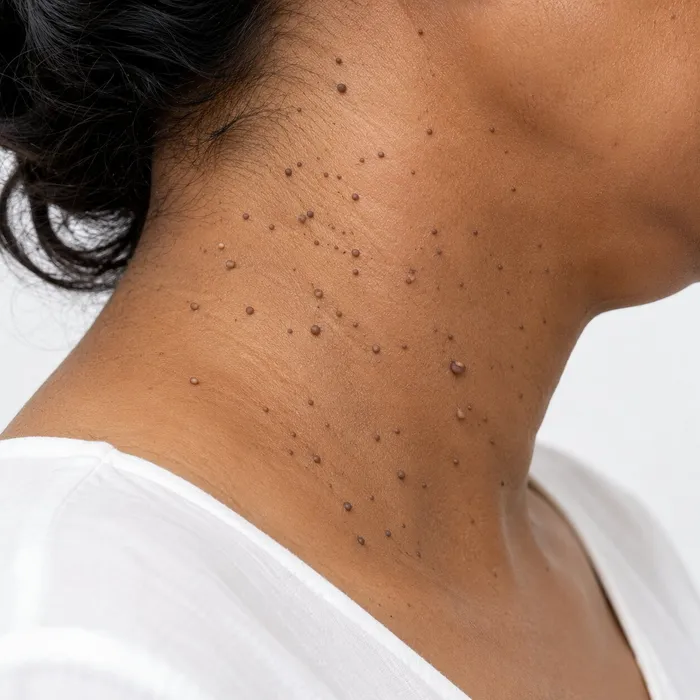
Noticed a new growth or skin tag?
Most new skin growths are benign and simply cosmetic in nature. An evaluation confirms what you're dealing with and whether removal is medically necessary, optional, or not recommended.
A mole that's changed in size, shape, or color?
Any mole that's changed noticeably, is asymmetric, has an irregular border, multiple colors, is larger than a pencil eraser, or is evolving deserves a prompt evaluation -- these are the recognized warning signs worth checking rather than watching.
Warts, moles, and skin tags are all common, generally benign skin growths, but they’re different in cause and, importantly, in when removal is actually medically relevant versus purely a matter of personal preference. Warts are caused by a viral infection of the skin and are contagious; skin tags are harmless growths of skin, more common with age, friction, and certain metabolic factors; moles are pigmented growths that are usually harmless but occasionally warrant closer attention if they change.
We start every visit with an honest assessment of what we’re actually looking at, since not every growth benefits from removal, and unnecessary removal carries its own small risks (scarring, in particular) that aren’t worth taking for something that was never a concern.
What to Expect at Your Visit
We examine the growth or growths in question, often using dermoscopy — a handheld magnification tool — for a closer look, particularly for pigmented lesions. For moles specifically, we assess against the recognized warning signs: asymmetry, irregular borders, multiple or uneven colors, a diameter larger than a pencil eraser, and any recent evolution in size, shape, or color. Where a lesion’s nature isn’t clear on examination alone, a biopsy provides a definitive answer.
Treatment Approach
Warts typically respond to cryotherapy (freezing), often requiring a few sessions spaced a few weeks apart depending on size and location. Skin tags and most benign moles that a patient wants removed for comfort or cosmetic reasons are removed surgically or via electrosurgery under local anaesthesia, a quick in-clinic procedure.
Where any lesion shows features that raise even a modest question, we recommend biopsy for pathology confirmation before proceeding further — this is a small, low-risk step that provides real certainty, and we don’t skip it to save time.
When Removal Is (and Isn’t) Necessary
Most skin tags and cosmetically bothersome moles are removed simply because the patient wants them gone — that’s a perfectly valid reason, and we’re happy to help. But we’re equally direct when a growth doesn’t need removal at all, since minor surgical procedures, however low-risk, are still procedures, and we’d rather tell you it’s unnecessary than perform a removal that wasn’t actually indicated.
How We Evaluate
- Clinical examination, often supported by dermoscopy for closer assessment
- Assessment of any concerning features in pigmented lesions (asymmetry, border, color, diameter, evolution)
- Biopsy where a lesion's nature isn't clear on examination alone
Treatment Options
- Cryotherapy: Freezing treatment for warts and certain other benign growths, often requiring more than one session.
- Surgical/Electrosurgical Removal: In-clinic removal of moles, skin tags, and other lesions where removal is appropriate, performed under local anaesthesia.
- Biopsy & Pathology: Where a lesion's appearance raises any question, sending a sample for pathology confirmation before deciding on further management.
Frequently Asked Questions
When should I worry about a mole?
What causes skin tags?
Are warts contagious?
Does mole removal leave a scar?
Book Your Appointment
Select an available time slot below to secure your consultation.
Patient Details
Already booked? Manage my appointmentWho is this appointment for?
Enter the patient's name below and your own WhatsApp number — the code and confirmation come to you.
Patients on this number — tap to fill in
Select Slot
Select a doctor and date to see available times.