
Alopecia Areata: Diagnosis & Treatment
Sudden, patchy hair loss has a specific autoimmune cause and a specific treatment approach -- an accurate diagnosis is the first step.
Book an Alopecia Areata EvaluationConsultation first · Treatment only when indicated
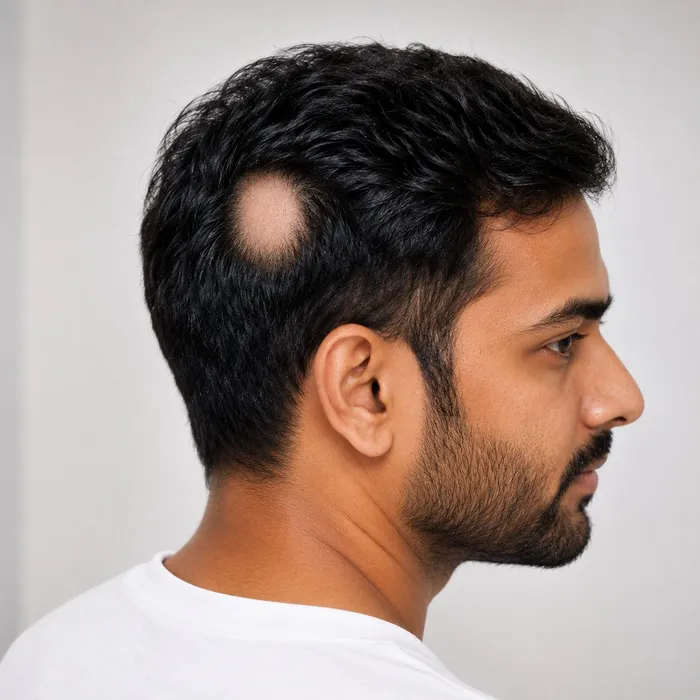
Noticed a sudden bald patch?
A well-defined, round or oval patch of hair loss that appeared relatively suddenly is the classic presentation of alopecia areata. An evaluation confirms the diagnosis and rules out other causes of patchy hair loss.
Already diagnosed and managing recurrence?
Alopecia areata can be unpredictable, with patches that resolve and sometimes recur. If you've dealt with this before, we'll discuss treatment options for the current episode and strategies for managing a condition that may recur over time.
Alopecia areata is an autoimmune condition in which the immune system mistakenly attacks hair follicles, causing sudden, often well-defined patches of hair loss. It’s distinct from pattern hair loss or hair shedding related to stress or deficiency, and it requires a different diagnostic and treatment approach.
The course of alopecia areata is genuinely unpredictable — some patches regrow spontaneously without treatment, others respond well to treatment, and in some patients the condition can recur, sometimes in new areas, over months or years. Being honest about this unpredictability upfront is part of managing the condition well.
What to Expect at Your Visit
Diagnosis is usually straightforward from the characteristic appearance of the patches on examination, sometimes supported by dermoscopy (magnified examination of the scalp and hair) to confirm findings and rule out other causes of patchy hair loss, such as fungal infection or scarring alopecia, which require entirely different treatment.
We’ll also ask about personal or family history of other autoimmune conditions, since alopecia areata is somewhat more common in people with a personal or family history of thyroid disease, vitiligo, or other autoimmune disorders — though having alopecia areata does not mean you will develop these conditions.
Treatment Approach
For localized patches, intralesional corticosteroid injections are typically the first-line treatment, delivered directly into the affected area to reduce the local immune attack on follicles and stimulate regrowth. This is generally well-tolerated, though it does involve a series of injections over multiple visits.
For children, very extensive patches, or areas where injections aren’t practical, topical treatments are used instead. For more extensive disease — including alopecia totalis (complete scalp hair loss) or alopecia universalis (complete body hair loss) — more advanced systemic treatment options exist and are discussed based on the extent and impact of the condition.
Living With an Unpredictable Condition
Because alopecia areata can recur, treatment isn’t always a single course that resolves the issue permanently. Some patients need periodic treatment for recurring patches over time. We aim to be realistic about this from the outset, rather than presenting any single treatment as a guaranteed permanent fix, and support patients through a condition that can be as emotionally challenging as it is physically unpredictable.
How We Evaluate
- Scalp examination and pattern assessment
- Dermoscopy of affected areas
- Assessment for associated autoimmune conditions where relevant
Treatment Options
- Intralesional Steroid Injections: Corticosteroid injections directly into affected patches, a first-line treatment to stimulate regrowth in localized alopecia areata.
- Topical Therapy: Topical treatments to reduce local inflammation and support regrowth, particularly for children or extensive involvement where injections aren't suitable.
- Advanced Therapy for Extensive Disease: For more extensive or treatment-resistant cases, escalation to systemic or advanced therapy options, discussed based on severity.
Conditions We Manage
Frequently Asked Questions
What causes alopecia areata?
Will hair grow back after alopecia areata?
Can alopecia areata come back after treatment?
Can children get alopecia areata?
Book Your Appointment
Select an available time slot below to secure your consultation.
Patient Details
Already booked? Manage my appointmentWho is this appointment for?
Enter the patient's name below and your own WhatsApp number — the code and confirmation come to you.
Patients on this number — tap to fill in
Select Slot
Select a doctor and date to see available times.