
Nail Disorder Treatment
Nail changes have specific causes -- accurate diagnosis matters since treatment courses for nails are often longer than for skin.
Book a Nail EvaluationConsultation first · Treatment only when indicated
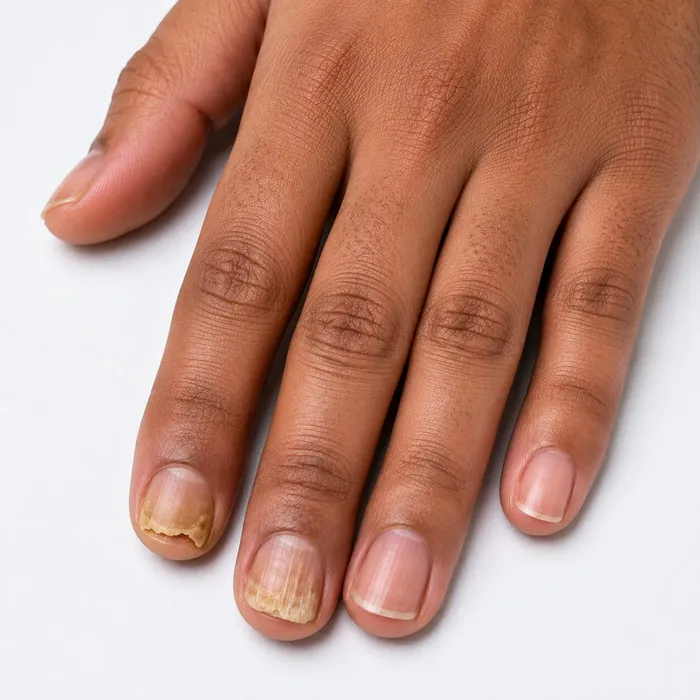
Noticed nail discoloration, thickening, or brittleness?
Nail changes can result from fungal infection, psoriasis, trauma, or other causes. An evaluation identifies which, since treatment differs significantly between them.
Painful, ingrown, or infected nail?
An ingrown nail or one showing signs of infection (redness, swelling, pus) benefits from prompt evaluation rather than home management, to prevent it worsening.
Nail changes — discoloration, thickening, crumbling, pitting, or separation from the nail bed — have a range of possible causes, most commonly fungal infection, but also including nail psoriasis, prior trauma, and less commonly other systemic conditions. Because these look similar to the untrained eye but require quite different treatment, an accurate diagnosis is the most important first step, particularly since nail treatment courses run considerably longer than skin treatment and getting the diagnosis wrong wastes months.
Ingrown nails are a separate, mechanical problem — usually affecting the big toe — caused by the nail edge growing into the surrounding skin, leading to pain, swelling, and sometimes infection if left untreated.
What to Expect at Your Visit
We examine the affected nail or nails closely, noting the specific pattern of change, since fungal infection, psoriasis, and trauma each tend to produce somewhat different nail changes. Where fungal infection is suspected, a nail clipping or scraping sent for microscopy or culture confirms the diagnosis before committing to a long treatment course — an important step, since oral antifungal treatment isn’t something to start on assumption alone.
Treatment Approach
Fungal nail infections are treated with topical antifungal therapy for early or limited involvement, or oral antifungal treatment for more established infection — and we’re upfront that nail treatment takes patience: fingernails take months and toenails can take the better part of a year to grow out fully, so visible improvement is gradual by nature, not a sign of ineffective treatment.
Ingrown nails are managed conservatively where possible, with a minor in-clinic procedure reserved for recurrent or more severe cases. Where nail changes are traced to psoriasis or another underlying condition, treatment is coordinated as part of managing that condition overall, since treating the nail in isolation without addressing the cause tends to be less effective.
Setting Realistic Expectations
Nail growth is slow, and this is the single most important thing to understand before starting nail treatment — a fungal nail infection that’s been present for a year took that long to develop and will take proportionate time to grow out clear, even with fully effective treatment. We set this timeline expectation clearly at your first visit so progress is judged accurately rather than assumed to be failing.
How We Evaluate
- Nail examination and pattern assessment
- Nail clipping/scraping for fungal culture or microscopy where infection is suspected
- Assessment for underlying causes: psoriasis, trauma, systemic conditions
Treatment Options
- Antifungal Therapy (Topical or Oral): For fungal nail infections, treatment matched to severity -- topical for early/mild involvement, oral for more established infection, given nails grow slowly and treatment courses run for months.
- Ingrown Nail Management: In-clinic management of ingrown nails, from conservative treatment to minor procedures for recurrent cases.
- Management of Nail Psoriasis & Other Causes: Where psoriasis or another systemic condition is driving nail changes, treatment coordinated with management of the underlying condition.
Frequently Asked Questions
How long does nail fungus treatment take?
How can I prevent ingrown nails?
Can psoriasis affect the nails?
Book Your Appointment
Select an available time slot below to secure your consultation.
Patient Details
Already booked? Manage my appointmentWho is this appointment for?
Enter the patient's name below and your own WhatsApp number — the code and confirmation come to you.
Patients on this number — tap to fill in
Select Slot
Select a doctor and date to see available times.