
Fungal Infection Treatment
Fungal infections are very treatable, but incomplete treatment is the most common reason they keep coming back.
Book a Fungal Infection EvaluationConsultation first · Treatment only when indicated
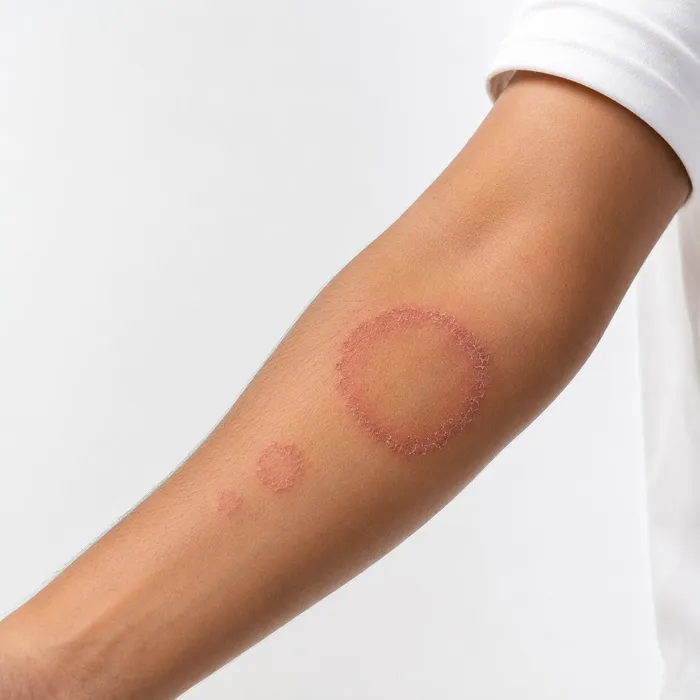
New itchy, ring-shaped, or scaly patch?
A new, spreading, itchy patch with a defined edge is a classic presentation of a fungal skin infection. An evaluation confirms the diagnosis, since several other conditions can look similar.
Infection that keeps returning despite treatment?
Recurring fungal infections usually point to incomplete treatment duration, an untreated source (like footwear or bedding), or occasionally an underlying factor worth investigating.
Fungal skin infections — including ringworm, athlete’s foot, and fungal infections of the groin — are common, especially in warm, humid climates, and are generally very treatable with appropriate antifungal medication. The most common reason they come back isn’t treatment failure in the medical sense — it’s stopping treatment too early once visible symptoms improve, while the fungus is still present at a lower level, or reinfection from an untreated source like footwear, bedding, or close contact.
Several other skin conditions — including eczema and certain forms of psoriasis — can look similar to a fungal infection at a glance, and using an antifungal cream on a non-fungal condition (or a steroid cream on an actual fungal infection, which can worsen it and make diagnosis harder later) is a common and avoidable mistake.
What to Expect at Your Visit
We examine the pattern and appearance of the affected skin, which is often distinctive enough for a confident clinical diagnosis. Where the presentation is less typical or has already been treated with the wrong product, a simple skin scraping examined under the microscope (KOH test) can confirm the diagnosis quickly and reliably.
Treatment Approach
Topical antifungal treatment is effective for most localized infections, but the single most important instruction we give is to continue treatment for the full prescribed duration — typically several weeks — even after the visible rash has cleared, since stopping early is the leading cause of apparent “recurrence” that’s really incomplete initial treatment.
For infections involving the nails or scalp, or widespread or resistant infections, oral antifungal treatment is usually more effective than topical treatment alone and is considered based on the extent of involvement.
Preventing Recurrence
Beyond medication, we spend real time on practical prevention: keeping affected areas dry, treating or replacing contaminated footwear, not sharing towels or clothing during an active infection, and addressing household factors if a family member has a similar infection at the same time. This part of the conversation is often what actually breaks a cycle of repeated “reinfection” that looks like treatment isn’t working.
How We Evaluate
- Skin examination and lesion pattern assessment
- Skin scraping/KOH examination where diagnosis needs confirmation
- Assessment of contributing factors: sweating, tight clothing, shared items, recurrence pattern
Treatment Options
- Topical Antifungal Therapy: Appropriate topical antifungal treatment for the correct full duration -- stopping early, even after symptoms improve, is the leading cause of recurrence.
- Oral Antifungal Therapy: For widespread, resistant, or nail/scalp involvement, oral antifungal treatment considered based on extent and response to topical treatment.
- Recurrence Prevention Counselling: Practical guidance on hygiene, clothing, footwear, and household measures to prevent reinfection, since the environment often carries as much responsibility as the treatment itself.
Frequently Asked Questions
Are fungal skin infections contagious?
Why does my fungal infection keep coming back?
How long does fungal infection treatment take?
Book Your Appointment
Select an available time slot below to secure your consultation.
Patient Details
Already booked? Manage my appointmentWho is this appointment for?
Enter the patient's name below and your own WhatsApp number — the code and confirmation come to you.
Patients on this number — tap to fill in
Select Slot
Select a doctor and date to see available times.