
Viral Skin Infections in Children
Common, generally harmless, and usually self-limiting -- but an accurate diagnosis helps set the right expectations and treatment plan.
Book a Consultation for Your Child's SkinConsultation first · Treatment only when indicated
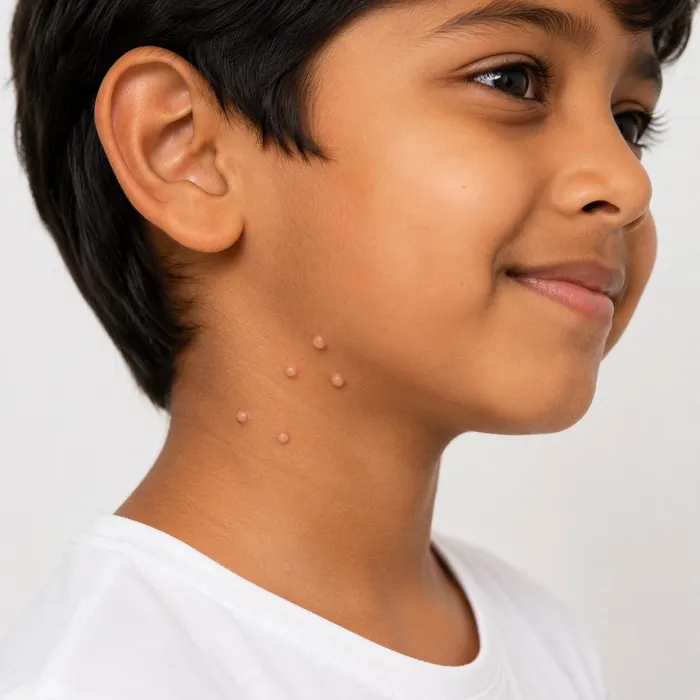
Noticed new bumps or growths on your child's skin?
Common viral skin infections like molluscum contagiosum and warts are usually straightforward to identify. An evaluation confirms the diagnosis and discusses whether treatment or watchful waiting is the better approach.
Infection that's spreading, persistent, or bothering your child?
If the infection is spreading to other areas, has been present for a long time, or is in a location causing discomfort or self-consciousness, we'll discuss active treatment options.
Viral skin infections in children — most commonly molluscum contagiosum and various types of warts — are extremely common, generally harmless, and often resolve on their own over time without treatment. They’re also contagious to some degree, spreading through direct skin contact or shared items, which is usually parents’ first practical concern alongside the appearance of the bumps themselves.
Because many of these infections are self-limiting, treatment is genuinely optional in a lot of cases rather than medically necessary — and we discuss this honestly, since removal procedures, however minor, still involve some discomfort for a child, and aren’t always worth it for a condition that would resolve on its own regardless.
What to Expect at Your Visit
We examine the affected skin to identify the specific type of infection, which is usually straightforward from appearance alone. We assess how extensive it is, whether it’s spread to new areas recently, and ask about school or close contacts, since these infections often appear in small clusters among children in close contact with one another.
Treatment Approach
For infections like molluscum contagiosum that commonly resolve on their own within months to about a year, watchful waiting — combined with simple hygiene guidance to limit spread to other areas or other children — is often the most appropriate approach, and we explain clearly why “doing nothing” can be the right medical choice here, not a lack of care.
Where the infection is bothering your child, spreading significantly, in a sensitive location, or a parent prefers active treatment, gentle in-clinic removal methods appropriate for children are available, alongside topical treatment options for certain presentations.
Setting Realistic Expectations
Most viral skin infections in children clear up over time, whether or not they’re actively treated, and new lesions can appear for a period even during treatment, which is a normal part of the process rather than a sign that treatment isn’t working. We explain this pattern clearly upfront so a temporary increase in visible bumps doesn’t cause unnecessary worry partway through a course of treatment.
How We Evaluate
- Visual examination and identification of infection type
- Assessment of extent and any spread to other body areas or other children (school, siblings)
- Discussion of watchful waiting vs. active treatment based on type, extent, and impact on your child
Treatment Options
- Watchful Waiting: For infections expected to resolve on their own -- common with molluscum contagiosum in particular -- monitoring without immediate intervention, with guidance on hygiene to limit spread.
- In-Clinic Removal: For warts, molluscum bothering the child, or lesions in sensitive areas, gentle in-clinic removal appropriate for a child's age and comfort.
- Topical Therapy: Topical treatment options for certain viral skin infections, used as an alternative or adjunct to removal depending on the specific case.
Frequently Asked Questions
Are viral skin infections like molluscum contagious?
What's the difference between molluscum and warts?
Can my child go to school with a viral skin infection?
Book Your Appointment
Select an available time slot below to secure your consultation.
Patient Details
Already booked? Manage my appointmentWho is this appointment for?
Enter the patient's name below and your own WhatsApp number — the code and confirmation come to you.
Patients on this number — tap to fill in
Select Slot
Select a doctor and date to see available times.