
Eczema Treatment
Managing eczema well means understanding your specific triggers, not just treating the current flare.
Book an Eczema EvaluationConsultation first · Treatment only when indicated
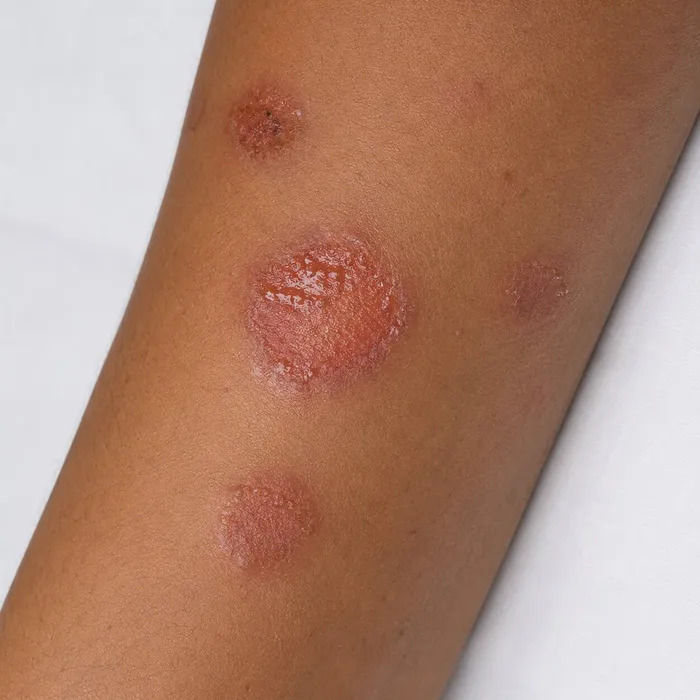
Dealing with occasional dry, itchy patches?
Mild, occasional dryness and irritation often responds to a good moisturizing routine. An evaluation helps confirm this, or identifies if something more is going on.
Persistent itching, redness, or flaring skin?
Chronic or recurring eczema benefits from a proper evaluation to identify your specific triggers and pattern, so treatment addresses the cause, not just the current flare.
Eczema, more broadly referred to as dermatitis, describes a group of conditions causing dry, itchy, inflamed skin — including atopic dermatitis (often linked to a personal or family history of allergies, asthma, or hay fever), contact dermatitis (triggered by a specific irritant or allergen), and other related patterns. Because the underlying trigger differs across these types, identifying which one you’re dealing with shapes both immediate treatment and, more importantly, long-term prevention.
Eczema tends to be a condition of flares and remission rather than a single episode — most patients do best with a plan that both controls active flares and reduces how often they happen, rather than treatment aimed only at the current outbreak.
What to Expect at Your Visit
We examine the pattern and distribution of your eczema, which itself often points toward a likely cause, and take a detailed history covering personal or family history of allergic conditions, recent changes in soaps, detergents, or skincare products, occupational or environmental exposures, and weather sensitivity. Where skin appears broken or weepy, we also assess for secondary bacterial infection, which needs separate treatment.
Treatment Approach
Active flares are treated with topical anti-inflammatory therapy at a strength and duration matched to the severity and body area involved — under-treating a flare often just prolongs it, while over-treating unnecessarily raises other risks, so getting this calibration right matters.
Between flares, a consistent moisturizing routine using an appropriate emollient does much of the long-term preventive work, and we spend real time on this since it’s often under-prioritized compared to medicated treatments. Identifying and reducing exposure to your specific triggers — whether a product, fabric, or environmental factor — is the other major lever for reducing how often flares occur.
Setting Realistic Expectations
Eczema, particularly atopic dermatitis, is often a long-term pattern with periods of flare and calm rather than a condition that’s cured once and never returns. Our goal is to help you understand your own triggers well enough to reduce flare frequency and severity over time, alongside effective treatment for the flares that do occur.
How We Evaluate
- Skin examination and pattern assessment
- History of triggers: allergens, irritants, weather, stress, personal or family history of atopic conditions
- Assessment for secondary infection in actively flaring or broken skin
Treatment Options
- Topical Anti-Inflammatory Therapy: Topical treatments to control active flares and reduce inflammation, used at the right strength for the right duration and body area.
- Barrier Repair & Moisturizing Regimen: A structured moisturizing routine using the right type of emollient, which does most of the long-term work in preventing flares between treatments.
- Trigger Identification: Working through your history to identify specific irritants, allergens, or environmental factors driving your flares, so they can be avoided going forward.
Frequently Asked Questions
How is eczema different from just dry skin?
What triggers eczema flares?
How important is moisturizing for eczema?
Book Your Appointment
Select an available time slot below to secure your consultation.
Patient Details
Already booked? Manage my appointmentWho is this appointment for?
Enter the patient's name below and your own WhatsApp number — the code and confirmation come to you.
Patients on this number — tap to fill in
Select Slot
Select a doctor and date to see available times.