Chemical Peels
The right peel depends on your skin type and goal -- selecting it correctly matters as much as the procedure itself.
Book a Chemical Peel ConsultationConsultation first · Treatment only when indicated
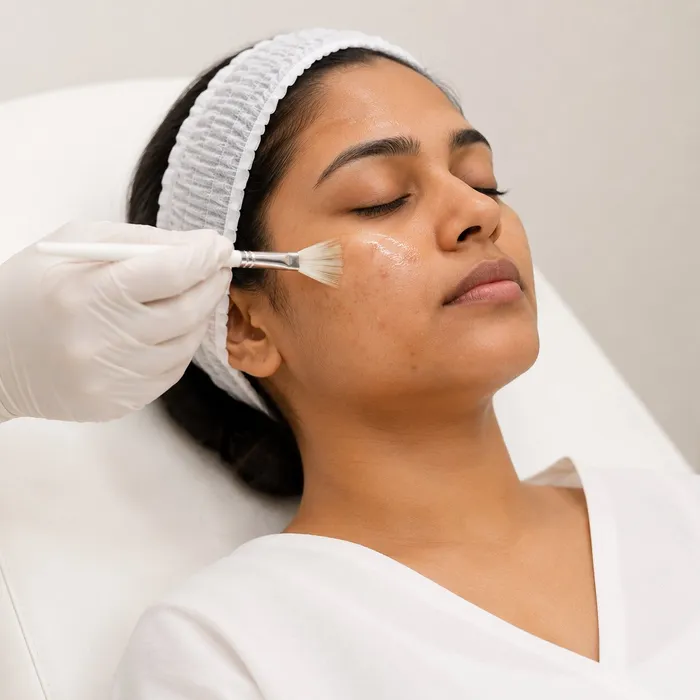
New to chemical peels?
An evaluation of your skin type, concerns, and any history of pigmentation or sensitivity helps determine which peel type and strength is appropriate for you before starting.
Looking to address specific texture or tone concerns?
Whether it's dullness, mild pigmentation, texture, or acne-prone skin, we'll match the peel type and course to your specific goal rather than a generic protocol.
Chemical peels use a controlled chemical solution to remove the outer layers of skin, encouraging renewal and improving texture, tone, and clarity. They range from very superficial peels with essentially no downtime to deeper peels that require a short recovery period, and the right choice depends on your skin type, your specific concern, and how much downtime you’re able to accommodate.
Peel selection matters more than people often expect — the wrong peel type, or the wrong strength for your skin type, can worsen pigmentation rather than improve it, particularly in melasma-prone or naturally darker skin. This is a big part of why we recommend a dermatologist-guided evaluation rather than choosing a peel based on marketing alone.
What to Expect at Your Visit
We assess your skin type, current concerns, and any relevant history — including prior reactions to skincare products, a tendency toward pigmentation, and any recent procedures — to select a peel type and strength appropriate for you specifically. We’ll also discuss your goal clearly, since “overall glow” and “targeted pigmentation improvement” call for different approaches.
Treatment Approach
Superficial peels are well suited to general skin maintenance and mild texture concerns, with little to no visible downtime, making them easy to fit into a regular skincare routine. Medium-depth peels address more specific concerns like pigmentation and texture more directly, but require a short recovery period and more careful spacing between sessions to avoid over-treating the skin.
Meaningful, visible improvement typically comes from a planned course of several sessions rather than a single treatment, and we’ll lay out a realistic course plan at your consultation rather than suggesting a single peel will resolve an established concern.
Setting Realistic Expectations
Chemical peels improve skin texture, tone, and clarity progressively over a course of treatment — they’re a genuinely effective tool for many concerns, but results build gradually and depend on consistent skincare between sessions, not just the peels themselves.
How We Evaluate
- Skin type and sensitivity assessment
- Review of current skincare products and any recent procedures
- Assessment of suitability given pigmentation history, given some peels carry higher risk in melasma-prone or darker skin
Treatment Options
- Superficial Peels: Gentle peels for overall glow, mild texture improvement, and general skin maintenance, with minimal downtime.
- Medium-Depth Peels: Used for more targeted concerns such as pigmentation and texture, requiring a short recovery period and appropriate spacing between sessions.
- Course Planning: Most visible improvement comes from a planned course of sessions rather than a single peel, spaced to allow the skin to recover between treatments.
Frequently Asked Questions
How much downtime is there after a chemical peel?
How many chemical peel sessions will I need?
Are chemical peels safe for all skin types?
Book Your Appointment
Select an available time slot below to secure your consultation.
Patient Details
Already booked? Manage my appointmentWho is this appointment for?
Enter the patient's name below and your own WhatsApp number — the code and confirmation come to you.
Patients on this number — tap to fill in
Select Slot
Select a doctor and date to see available times.