
Psoriasis Treatment
Psoriasis is a chronic condition best managed with a sustained plan, not a search for a single cure.
Book a Psoriasis EvaluationConsultation first · Treatment only when indicated
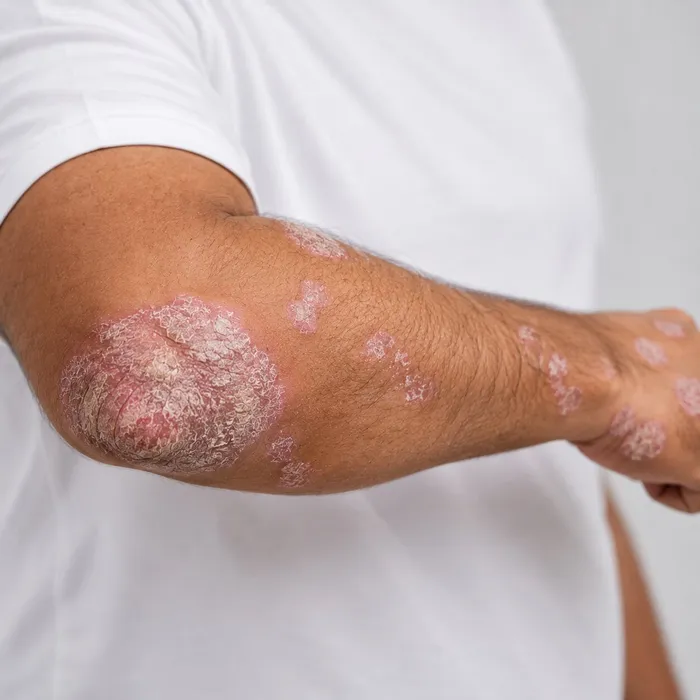
Noticed thick, scaly, red patches?
Psoriasis typically presents as well-defined red patches with silvery scale, often on the elbows, knees, or scalp. An evaluation confirms the diagnosis and rules out other scaly skin conditions.
Already diagnosed and managing flares?
If you're living with psoriasis, we'll assess your current extent and severity and build or adjust a long-term management plan around it.
Psoriasis is a chronic autoimmune condition that causes skin cells to build up rapidly, forming the characteristic thick, red, scaly patches most commonly seen on the elbows, knees, scalp, and lower back, though it can affect any part of the body, including nails. It is not contagious — a common and persistent misconception that unfortunately still affects how patients are treated socially, and one we’re happy to clarify plainly for patients and family members alike.
Because psoriasis is a chronic, relapsing-remitting condition, our approach centers on long-term management rather than positioning any single treatment as a permanent cure. Most patients do well with a sustained plan that controls flares and keeps the condition manageable over years.
What to Expect at Your Visit
We examine the extent and pattern of your psoriasis, including scalp, nails, and skin folds, which are often overlooked but relevant to treatment choice. We also ask specifically about joint pain, stiffness, or swelling, since psoriatic arthritis can accompany skin psoriasis and needs to be identified and managed separately if present.
Treatment Approach
For limited disease affecting a small body surface area, topical therapy is usually sufficient as the primary treatment, used consistently during flares and often at a lower maintenance frequency between them. For more extensive psoriasis, phototherapy is a well-established option with a good track record, considered based on how much of the body is affected and practical access to treatment sessions.
For moderate-to-severe psoriasis, or when joints are involved, systemic treatment options are discussed and coordinated appropriately, since these decisions typically benefit from ongoing monitoring alongside treatment.
Setting Realistic Expectations
Psoriasis is a long-term condition with a relapsing-remitting course — flares and periods of improvement are both expected parts of managing it, not a sign that treatment has failed. We build treatment plans around sustained, long-term control instead of promising a permanent cure that current medical evidence doesn’t yet support, and we help you develop a realistic sense of your own flare pattern and triggers over time.
How We Evaluate
- Skin examination and assessment of extent (body surface area involved)
- Screening for psoriatic arthritis symptoms (joint pain, stiffness, swelling)
- Assessment of common trigger factors: stress, infection, certain medications
Treatment Options
- Topical Therapy: Topical treatments to reduce inflammation and scaling, effective as the primary treatment for limited, mild-to-moderate disease.
- Phototherapy: For more extensive psoriasis, phototherapy is a well-established, effective option considered based on extent and access.
- Systemic Therapy Referral: For moderate-to-severe or joint-involving disease, systemic treatment options discussed and coordinated based on severity and overall health.
Frequently Asked Questions
Is psoriasis contagious?
What causes psoriasis?
Can psoriasis be cured?
Can psoriasis cause joint pain?
Book Your Appointment
Select an available time slot below to secure your consultation.
Patient Details
Already booked? Manage my appointmentWho is this appointment for?
Enter the patient's name below and your own WhatsApp number — the code and confirmation come to you.
Patients on this number — tap to fill in
Select Slot
Select a doctor and date to see available times.