
Vitiligo Treatment
An accurate diagnosis and an honest conversation about realistic treatment goals -- vitiligo management works best with both.
Book a Vitiligo EvaluationConsultation first · Treatment only when indicated
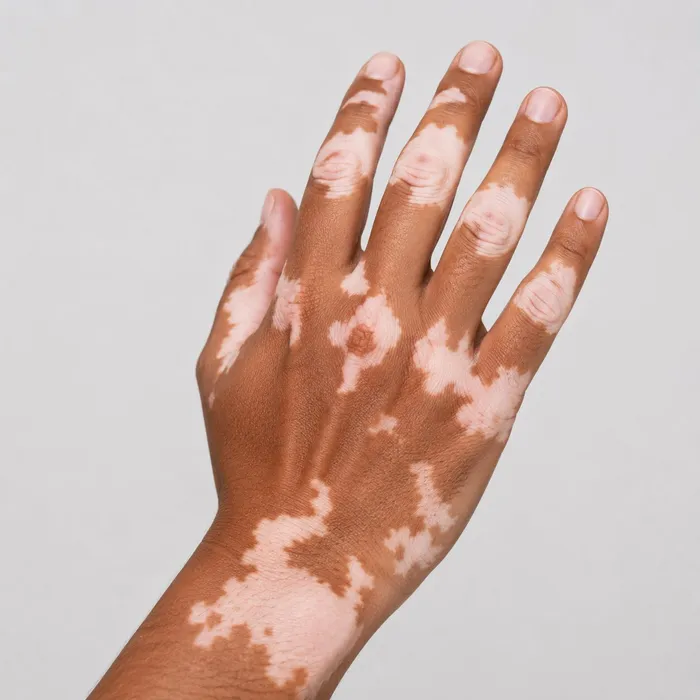
Noticed new white or pale patches?
Not every pale patch is vitiligo -- fungal infections and other skin conditions can look similar. An evaluation confirms the diagnosis before treatment begins.
Already diagnosed and considering treatment?
If vitiligo is confirmed, we'll discuss which treatment options fit your specific pattern, extent, and how active or stable the condition currently is.
Vitiligo is an autoimmune condition in which the immune system targets and destroys melanocytes, the cells responsible for skin pigment, leading to well-defined patches of depigmented skin. It can appear anywhere on the body, and its course varies significantly between individuals — some people have a few small, stable patches for years, while others experience more extensive or actively spreading depigmentation.
We’re candid from the first visit: vitiligo is a manageable condition, and treatment can meaningfully restore pigment in many cases, especially with early and consistent treatment, but there is currently no guaranteed cure, and results vary by body area, extent, and how active the condition is. We won’t promise outcomes we can’t reliably deliver.
What to Expect at Your Visit
We examine the affected areas, often using a Wood’s lamp to confirm the diagnosis and assess the full extent of involvement, since some patches aren’t easily visible under normal light. We’ll also ask about how long you’ve had it, whether it’s been stable or spreading, and screen for other autoimmune conditions that occur somewhat more often alongside vitiligo, such as thyroid disease.
Treatment Approach
For limited, stable vitiligo, topical treatment is often the starting point, working best on the face and other areas with good response rates, and less reliably on hands, feet, and areas over bony prominences. For more extensive disease, phototherapy tends to offer better results and is discussed as an option based on the extent of involvement and practical access to treatment.
For patients who want it, we also discuss cosmetic camouflage options honestly as a complement to medical treatment for areas that are slow to respond or difficult to treat, not as a replacement for pursuing repigmentation where it’s realistic.
Setting Realistic Expectations
Response to treatment varies meaningfully by body area (the face generally responds best, hands and feet the least reliably), by how long a patch has been present, and by how active the disease currently is. We discuss this honestly and specifically for your case at your evaluation, rather than offering a generic timeline, so you can make an informed decision about which treatments to pursue.
How We Evaluate
- Skin examination, often supported by Wood's lamp for confirmation
- Assessment of extent, distribution, and activity (stable vs. spreading)
- Screening for associated autoimmune conditions where relevant
Treatment Options
- Topical Therapy: Topical treatments to reduce the local immune activity driving pigment loss, most effective on certain body areas and in earlier, more limited disease.
- Phototherapy Referral: For more extensive vitiligo, phototherapy is often the most effective option, considered and coordinated based on extent and access.
- Camouflage & Cosmetic Guidance: Practical guidance on cosmetic camouflage options for patients who want them, alongside -- not instead of -- medical treatment.
Conditions We Manage
Frequently Asked Questions
What causes vitiligo?
Will vitiligo spread to other parts of my body?
Can vitiligo be cured?
What treatment options are available for vitiligo?
Book Your Appointment
Select an available time slot below to secure your consultation.
Patient Details
Already booked? Manage my appointmentWho is this appointment for?
Enter the patient's name below and your own WhatsApp number — the code and confirmation come to you.
Patients on this number — tap to fill in
Select Slot
Select a doctor and date to see available times.