
Skin Tag Removal
Small, soft growths removed in minutes, with the right method for their size and site.
- AIIMS-trained dermatologists
- Consultation first
- KK Nagar, Chennai
Evidence-based care
No unnecessary procedures
Skin tags that bother you or catch on clothing and jewellery?
Skin tags are harmless and removal is optional. We confirm they are skin tags, explain the method, and remove them in a short visit.
A growth you are not sure is a skin tag?
Not every small bump is a skin tag. Growths that bleed, change, are dark or hard, or appear suddenly should be examined before they are removed.
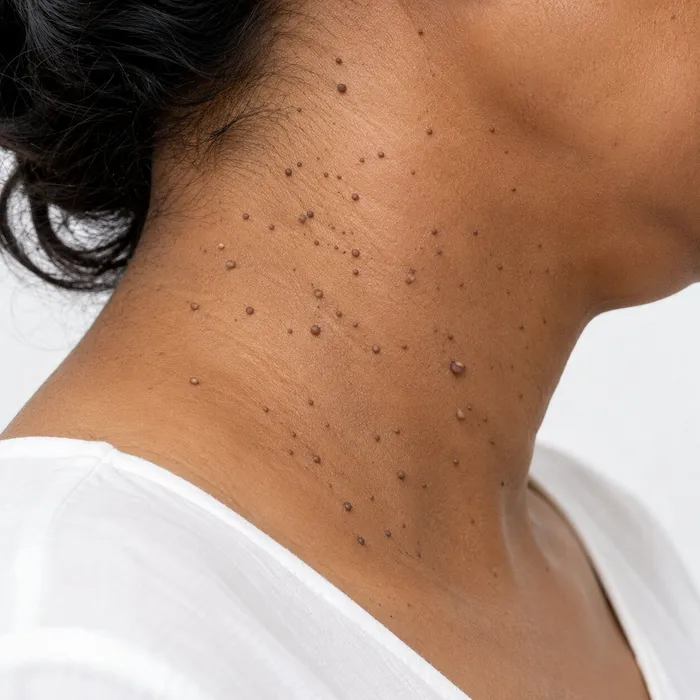
Skin tags are small, soft, skin-coloured or brown growths that hang from the skin on a thin stalk. They are harmless, and very common, especially in skin folds such as the neck, underarms, groin and under the breasts. They are not contagious and do not turn into cancer. People ask for removal because of rubbing, catching, bleeding or appearance.
Why Skin Tags Appear
Friction and skin folds play a part, and tags often run in families. Weight gain, pregnancy and insulin resistance make them more likely, and a sudden crop of tags, especially with a dark, velvety neck, can be an early sign of high insulin. See why skin tags appear and whether they grow back and acanthosis nigricans.
How Skin Tags Are Removed
Removal takes a few minutes. We choose the method by size, number and site:
- Snip excision: the quickest for tags with a thin stalk. A numbing cream or a tiny injection is used.
- Cautery: seals the base as it removes the tag, useful for small tags and those near the eyelid, where bleeding must be minimal.
- Freezing: a simple option for small tags; the tag darkens and falls off. It can leave a pale or dark mark, so we do not use it for every site.
Large tags, tags near the eyes, and tags in crowded areas are treated carefully, sometimes in more than one sitting.
Recovery and Aftercare
A small scab forms and drops off in a week or so. Keep the area clean and dry, avoid picking, and apply the ointment we give you. Most people return to normal activity straight away. The skin may stay pink or slightly paler or darker for some weeks.
Will Skin Tags Come Back?
A removed tag does not grow back, but new tags can appear nearby or elsewhere, especially if the cause persists. Keeping weight in a healthy range and treating insulin resistance lowers the chance.
Why Not Remove Them at Home?
Tying with thread, cutting with nail clippers and home “removal” creams cause bleeding, infection, scarring and burns, and can remove a growth that was not a skin tag at all. See skin tag removal at home: the risks.
When to See a Doctor First
See a dermatologist before removal if a growth is dark, hard, irregular, bleeding, growing quickly or painful, or if you have dozens of tags. Every removal we do is checked, and anything unusual is sent for testing.
What to Expect at Your Visit
We examine the tags and your skin, explain the method, the numbing and the aftercare, and in most cases remove them at the same visit.
Related
Mole removal, warts, moles and skin tags overview, and our page on skin tags.
How We Evaluate
- 1
Examination to confirm the growth is a skin tag and not a wart, mole or another lesion
- 2
Review of how many tags there are, their size and their position
- 3
Check for associated conditions such as insulin resistance, where tags are numerous
Treatment Options
Snip Excision
Small tags are cut at the base with sterile scissors under a numbing cream or injection, with minimal bleeding.
Cautery (Electrosurgery)
A fine heated tip removes the tag and seals the base in one step, which suits small tags and those with a wider base.
Cryotherapy
Freezing with liquid nitrogen makes small tags fall off over a week or two. It is simple, but may need repeating.
Treating the Cause
Many skin tags travel with weight gain or insulin resistance. We discuss tests and lifestyle where it applies.
Conditions We Manage
Related Articles
Visit Our Clinic
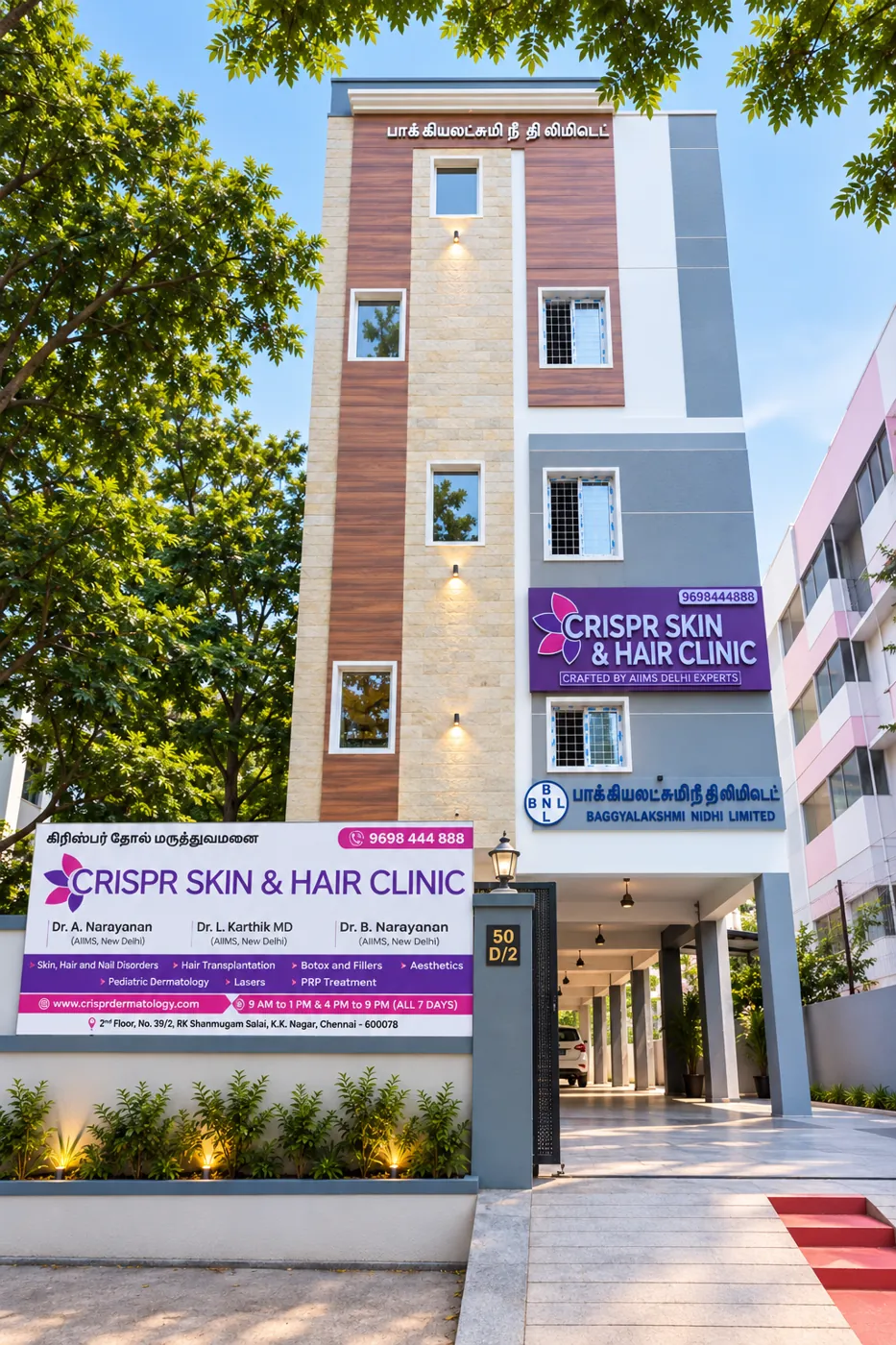
A look inside CRISPR Skin and Hair Clinic, KK Nagar.





Questions patients ask
Frequently Asked Questions
What causes skin tags?
Do skin tags grow back after removal?
Is skin tag removal painful?
Is it safe to remove skin tags at home?
Will skin tag removal leave a mark?
Are skin tags a sign of diabetes?
Book Your Appointment
Select an available time slot below to secure your consultation.
1Choose a slot
Next 7 days
Available slots
You're booked
What to bring
- Previous prescriptions, reports and photos of your condition