
Ear Lobe Repair
A short procedure under local anaesthetic to repair a split, torn, or stretched earlobe and restore a natural-looking lobe.
- AIIMS-trained dermatologists
- Consultation first
- KK Nagar, Chennai
Evidence-based care
No unnecessary procedures
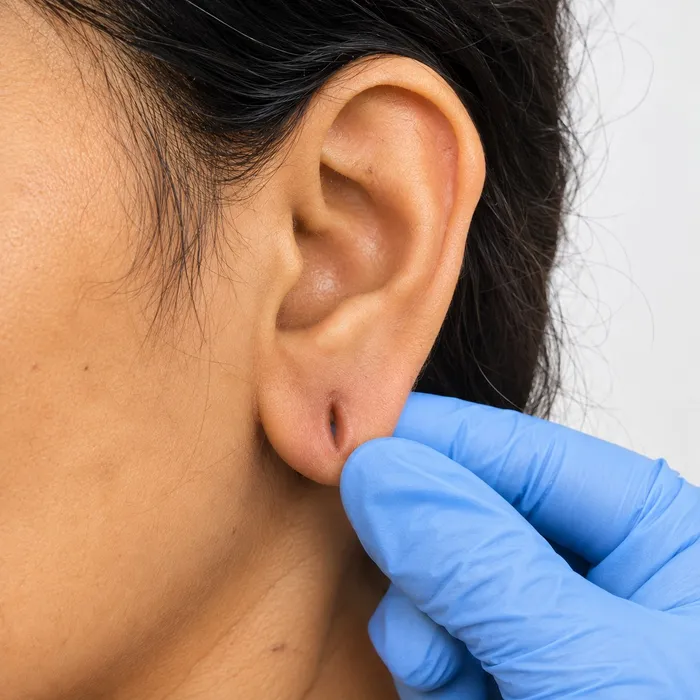
Torn or split earlobe from an earring?
A lobe that has torn through, from a pulled earring or injury, can usually be repaired. An examination confirms what is involved and the best technique.
Gradually stretched or elongated earlobes?
Long-term heavy earrings can widen the piercing and elongate the lobe. Repair can restore shape, and we discuss what is realistic.
Earlobes are delicate. A heavy earring, a snag on clothing, a pulled earring, or years of stretching can split the lobe, leaving a cleft or an enlarged hole. It is a common problem, and often an embarrassing one, but it is usually straightforward to repair.
Types of Problem
A complete split means the lobe has torn right through, so the two halves are separate. A partial split leaves a deep notch or an enlarged, elongated piercing hole. Stretched lobes are elongated gradually by long-term wear of heavy earrings. Each is repaired slightly differently, and we describe them in more detail in split earlobe.
How the Repair Works
Under local anaesthetic, the lining that has grown along the edges of the tear is removed so that fresh edges can heal together. The lobe is then closed in layers with fine stitches, usually shaped so that the scar does not pull the lobe out of line. Depending on the type of tear, different closure techniques are used, and we choose one that gives a smooth lobe and, if you want, allows for re-piercing later. See split earlobe repair explained for the techniques.
What to Expect
The procedure takes a short time and you go home the same day. Stitches are removed after about a week or so, depending on the technique. The earlobe may be swollen and tender at first, and a small scar will remain, which usually fades to a fine line.
Wearing Earrings Again
Healing needs time before the ear can be pierced again, commonly several weeks to a few months, and the new piercing is often placed slightly away from the scar line. We advise on timing and on choosing lighter earrings to protect the repair. See recovering from earlobe repair and re-piercing.
Who Needs Extra Care
People who form keloids or thick scars, which is more common in some skin types, need a careful plan, since the repair itself, like the original piercing, can trigger a scar. We discuss this in advance and plan aftercare accordingly. Those with bleeding problems, active skin infection, or other health conditions also need assessment first.
Prevention
Lighter earrings, avoiding pulling on earrings, removing them for sports, and not wearing heavy earrings for extended periods all help. See preventing torn and stretched earlobes.
Booking
Online booking is for a consultation. The repair is planned and scheduled with the doctor after your examination.
Realistic Expectations
Repair restores the lobe’s continuity and shape, but a scar remains, and a repaired lobe is somewhat more vulnerable than an untouched one. We explain what to expect for your lobe before you decide.
How We Evaluate
- 1
Examination of the lobe: whether it is completely split, partly split, or stretched
- 2
Assessment of tissue quality, thickness, and scarring
- 3
History of keloid or thick scars, which affects the plan
Treatment Options
Repair of a Split Earlobe
The edges of the cleft are freshened and the lobe is closed in layers with fine sutures, under local anaesthetic.
Repair of a Stretched Lobe
Where the piercing has widened or the lobe has elongated, tissue is reshaped to restore a more natural contour.
Planning for Re-Piercing
Guidance on when and how earrings can be worn again once the repair has healed.
Scar Care and Follow-Up
Aftercare and review to check healing and manage scarring, especially for scar-prone skin.
Conditions We Manage
Related Articles
Visit Our Clinic
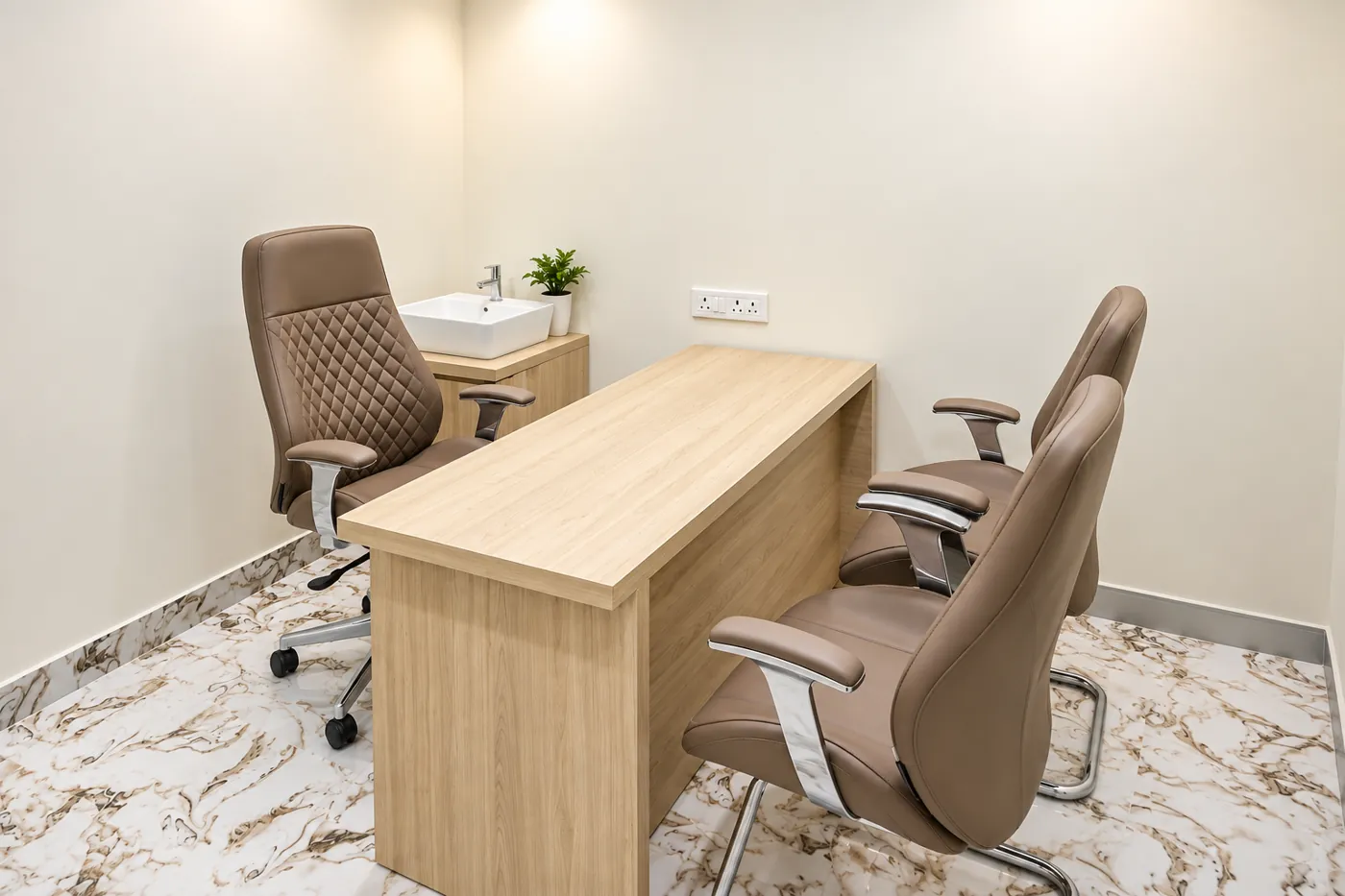
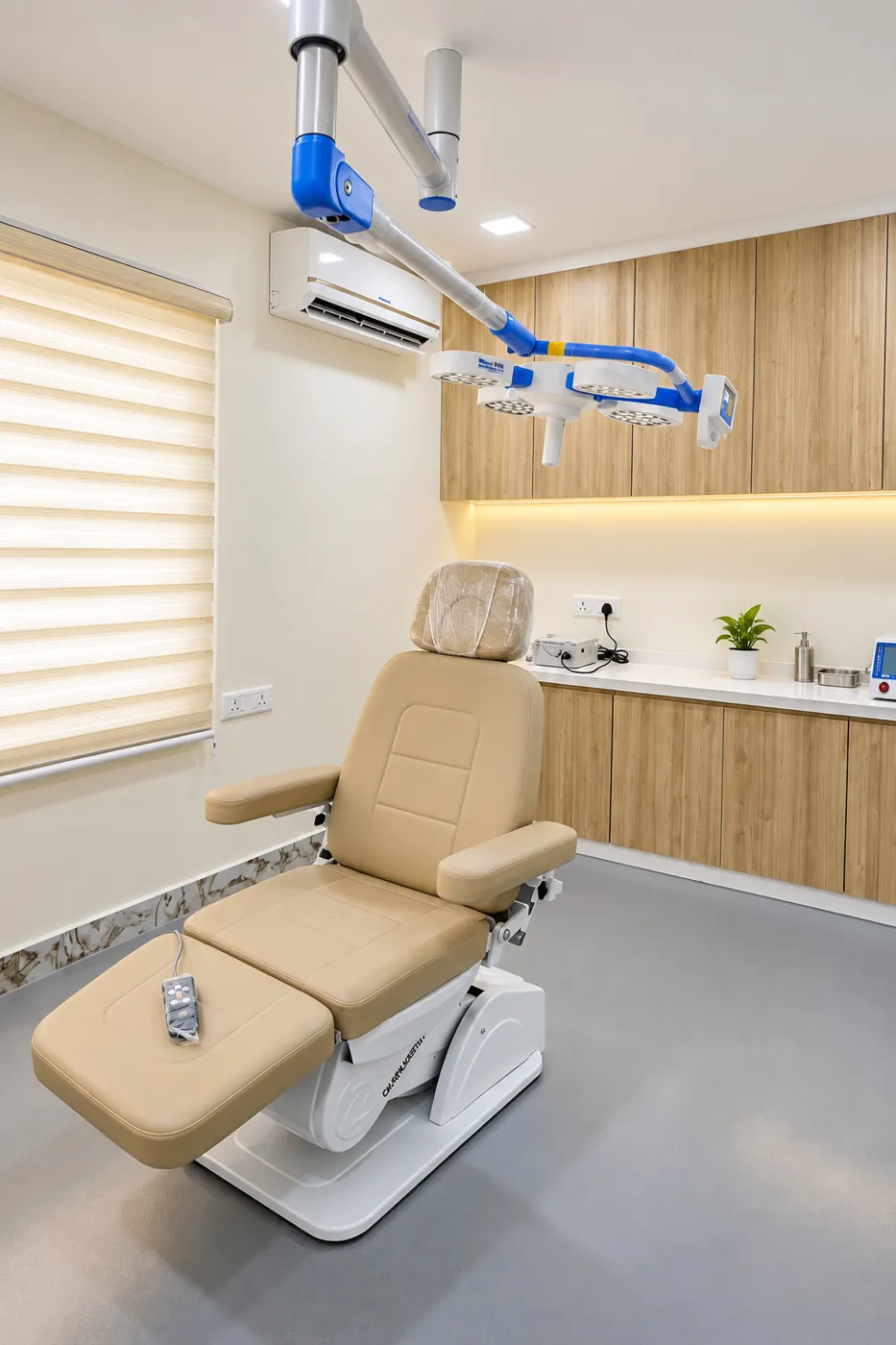
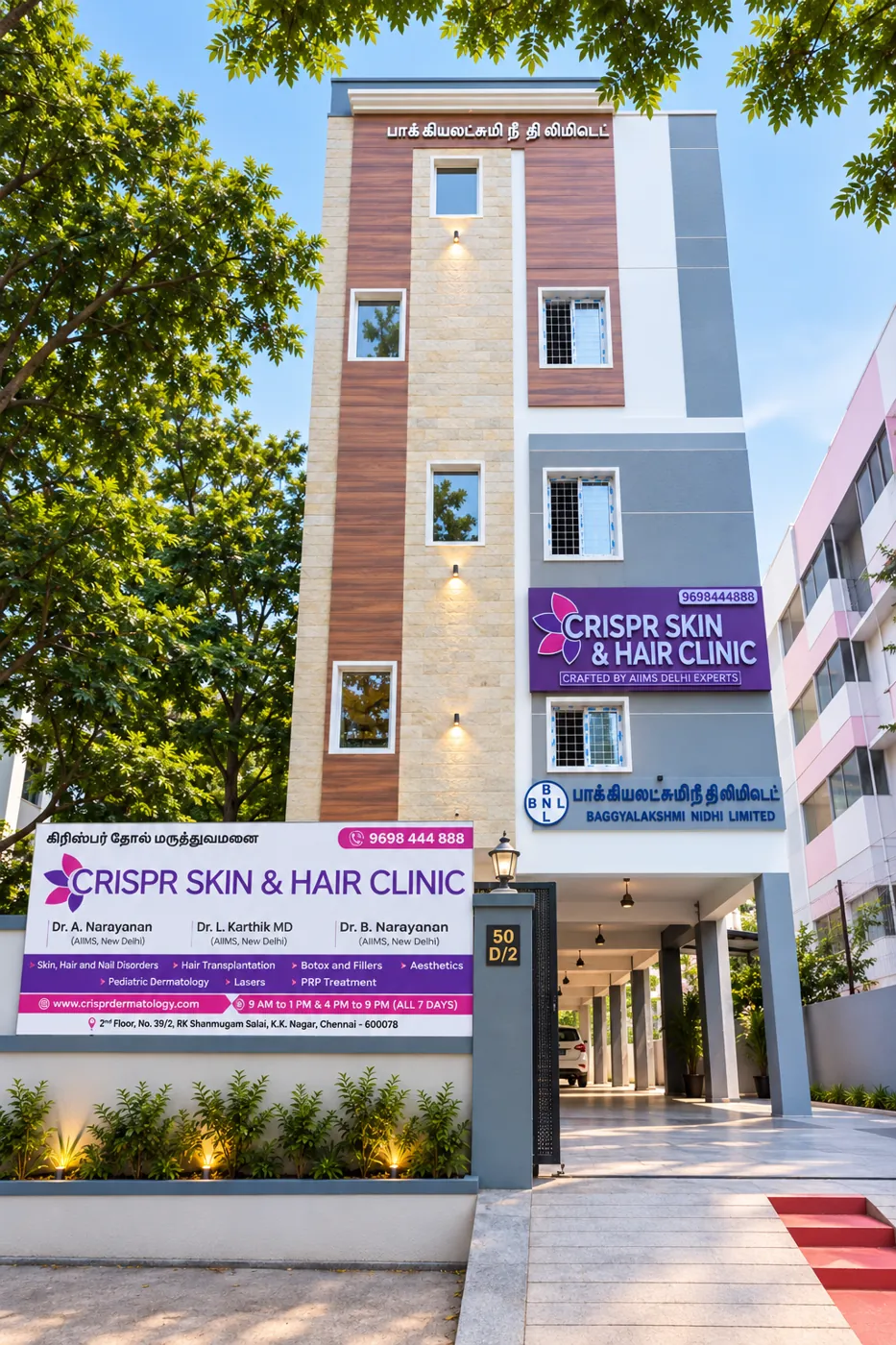
A look inside CRISPR Skin and Hair Clinic, KK Nagar.



Questions patients ask
Frequently Asked Questions
Is earlobe repair painful?
How long after earlobe repair can I wear earrings again?
Will earlobe repair leave a visible scar?
Who is suitable for earlobe repair?
I get keloids. Can I still have my earlobe repaired?
Can stretched or elongated earlobes be repaired?
Book Your Appointment
Select an available time slot below to secure your consultation.
1Choose a slot
Next 7 days
Available slots
You're booked
What to bring
- Previous prescriptions, reports and photos of your condition