Xanthelasma
Soft yellow plaques on the eyelids: harmless to the eye, worth a cholesterol check, and removable by TCA touch, excision, or RFA.
Book a Xanthelasma ConsultationYellowish patches near the inner corners of your eyes?
The inner upper and lower eyelids are the classic sites. An examination confirms it, and a blood test checks your lipids.
Patches growing or spreading, or returning after treatment?
Xanthelasma can slowly enlarge and recur. We review the cause and discuss the options again.
What Is It?
Xanthelasma are yellowish plaques that develop on or around the eyelids. They are made of cholesterol-laden cells that collect in the skin. They are the most common type of xanthoma, a skin sign of fat deposits, and they are benign, so they do not turn cancerous or affect vision. They do, however, tend to persist and slowly grow.
What Causes Them
In a proportion of people, xanthelasma are linked to raised blood cholesterol or other lipid abnormalities, including inherited conditions that cause very high cholesterol from a young age. In others, blood lipids are normal and the cause is not clear. Diabetes, thyroid disease, and some liver conditions can contribute. Because of this variability, a blood test is the only way to know. See xanthelasma and the cholesterol link.
Why a Medical Check Matters
Raised cholesterol increases the long-term risk of heart disease and stroke. Xanthelasma, especially at a young age or with a family history, can be an early visible clue. Checking and treating the lipids matters more for your health than removing the patches. Removing patches without addressing the lipids also makes recurrence more likely.
What They Look Like
Typically soft, yellow or orange-yellow, flat or slightly raised, with a smooth surface and defined edges. They begin small, often at the inner upper eyelid, and can enlarge or multiply. They are usually symmetrical. They are painless and do not itch.
Telling Them Apart From Other Lesions
Several things can look similar, including cysts, skin tags, warts, and, rarely, other growths. If a lesion is hard, ulcerated, bleeding, rapidly changing, or not yellow, an examination is important to rule out other diagnoses.
Treatment Overview
Patches do not usually disappear on their own, and creams do not remove them. Treatment is considered for appearance or when patches are enlarging. We offer three established methods: a TCA touch for small, flat patches, surgical excision for larger or deeper ones, and radiofrequency ablation (RFA) for small to moderate patches. Each has advantages and drawbacks, and eyelid skin is thin, so careful technique matters. See our treatment options compared and the xanthelasma treatment service.
Recurrence
Recurrence is common after any treatment, sometimes within a year or two, particularly if the lipids remain high. Managing the underlying cause helps. See recurrence and aftercare.
When to Seek Help
See us if you notice yellowish eyelid patches, particularly if they are new, increasing, or if you have a family history of high cholesterol or heart disease. Seek assessment promptly for any eyelid lump that is bleeding, ulcerated, painful, or rapidly growing.
Risk Factors
- Raised cholesterol or other lipid disorders, including inherited ones
- Diabetes, thyroid disease, and certain liver or kidney conditions
- Family history of high cholesterol or early heart disease
- Middle age and above, and more commonly in women
- Some people have normal lipids and still develop xanthelasma
Symptoms
- Soft, flat or slightly raised yellowish plaques on or around the eyelids
- Usually near the inner corners, often on both sides
- Painless, with no effect on vision
- Slow growth over months or years, and rarely clearing on their own
Treatment
Check Lipids and Risk Factors
Blood tests and medical review, with treatment of any underlying lipid disorder.
TCA Touch
Precise spot application of trichloroacetic acid for small, flat patches, usually repeated.
Surgical Excision
Removal with fine stitches, suited to larger or deeper patches.
Radiofrequency Ablation (RFA)
Layer-by-layer removal with controlled depth, for small to moderate patches.
Learn more about Xanthelasma Treatment in Chennai | KK Nagar →
Related Articles
Related Conditions
Our Specialists



Visit Our Clinic
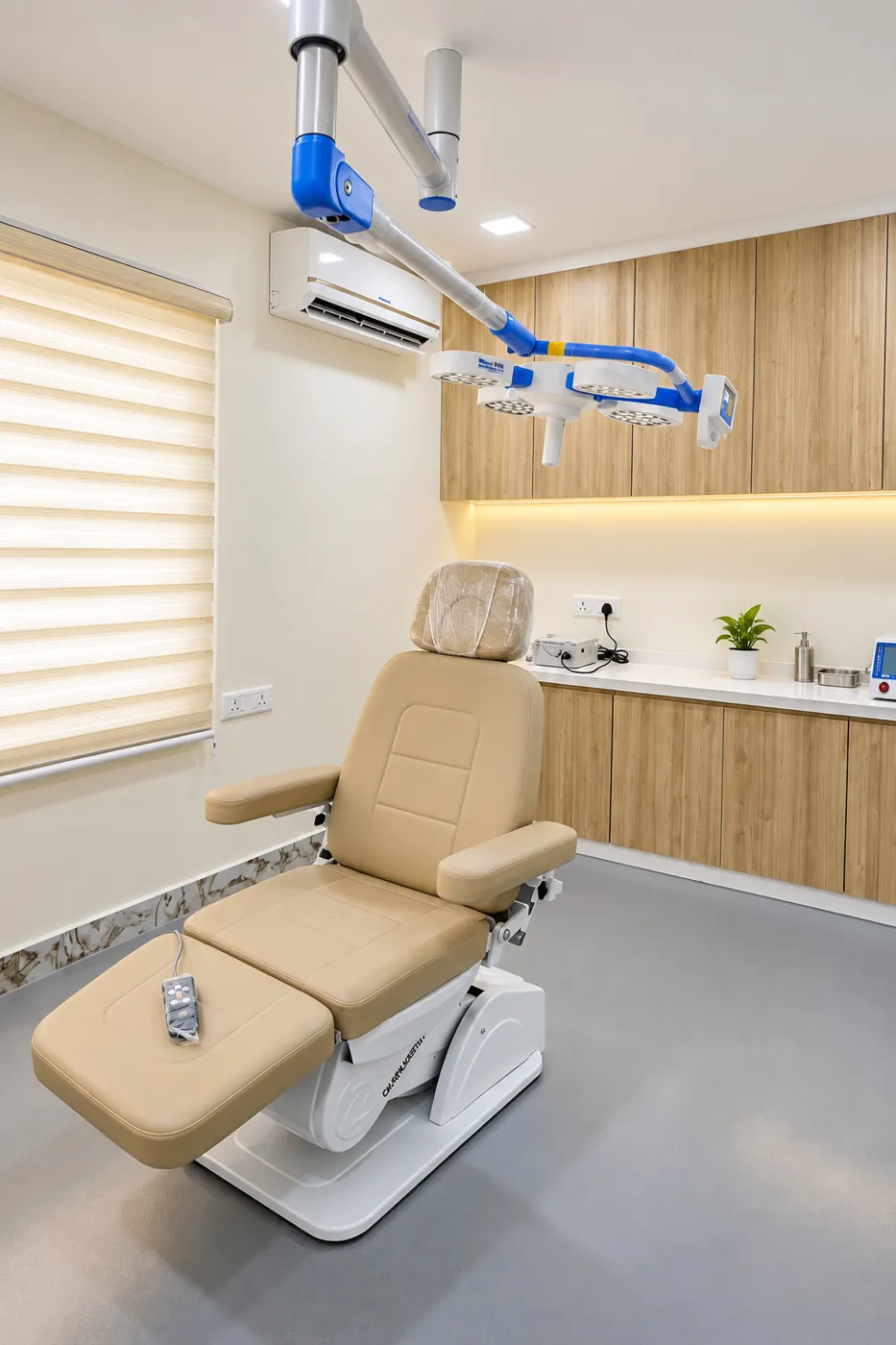
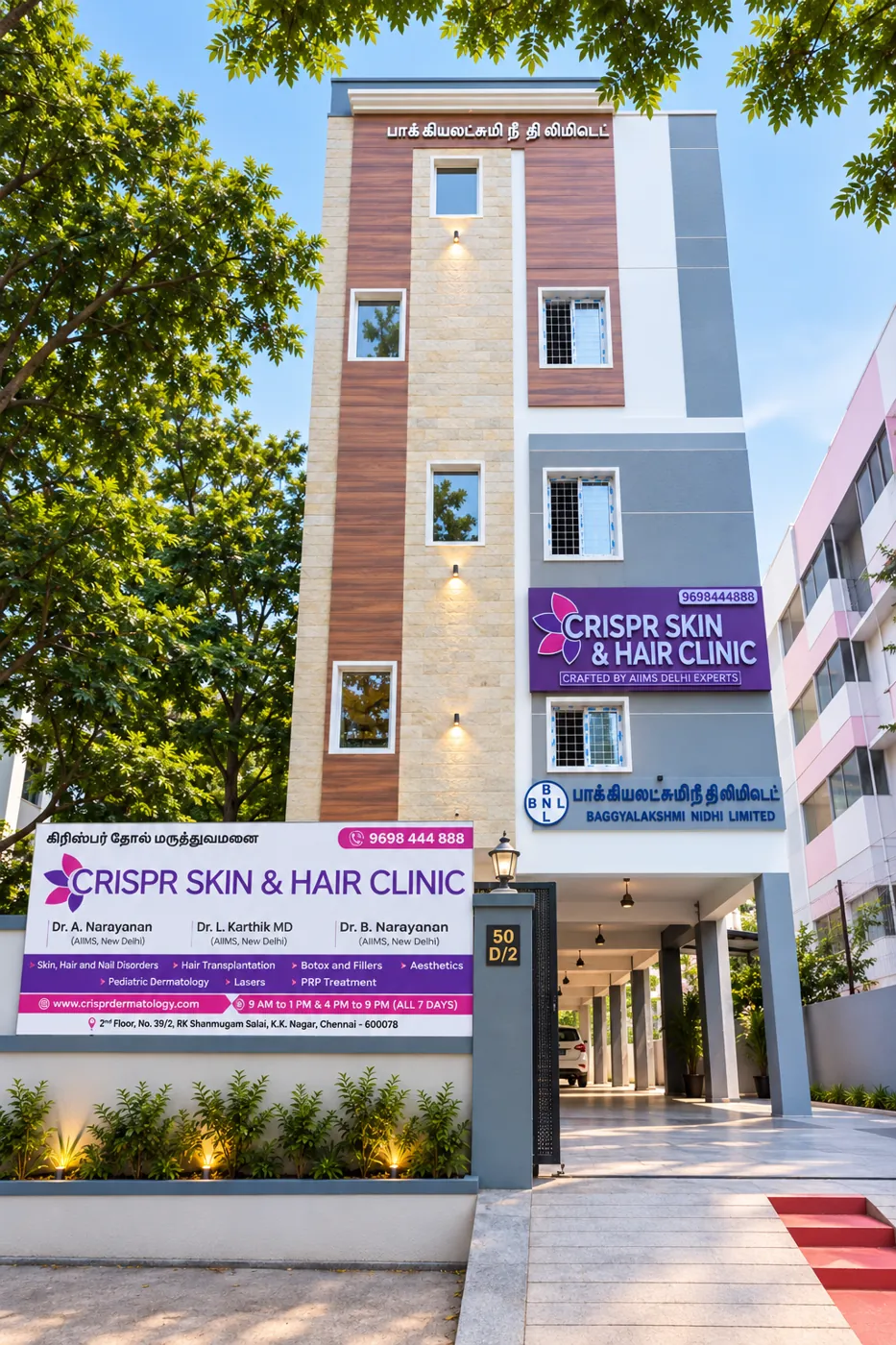
A look inside CRISPR Skin and Hair Clinic, KK Nagar.




Questions patients ask
Frequently Asked Questions
Does xanthelasma mean I have high cholesterol?
What are the treatment options for xanthelasma?
Can xanthelasma come back after treatment?
Is xanthelasma dangerous or cancerous?
Book a Xanthelasma Consultation
Schedule a comprehensive evaluation at CRISPR Skin and Hair Clinic. Choose your preferred time and secure your slot instantly.
Open Booking Calendar