Xanthelasma Treatment
Soft yellow patches on the eyelids are harmless to the eye but worth a cholesterol check. We offer three established methods: TCA touch, excision, and RFA.
- AIIMS-trained dermatologists
- Consultation first
- KK Nagar, Chennai
Evidence-based care
No unnecessary procedures
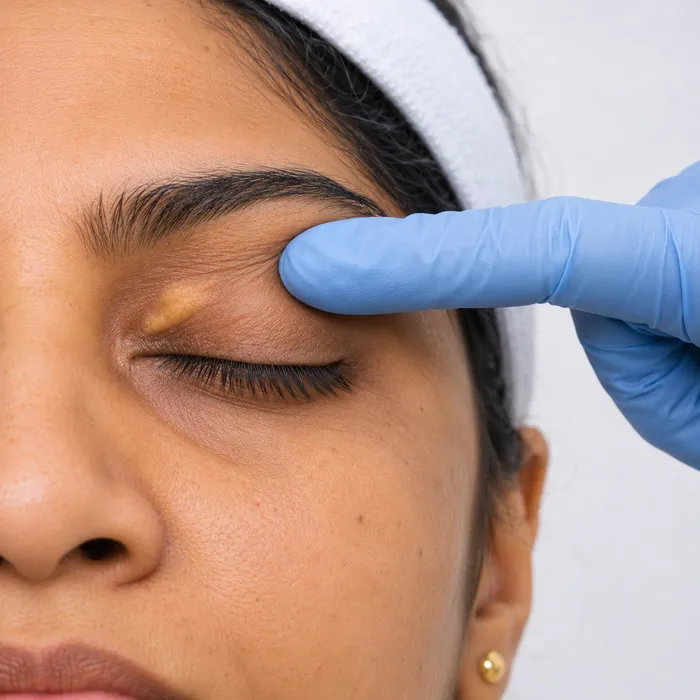
Noticed yellowish patches near the inner corner of your eyelids?
These are typical of xanthelasma. An examination confirms the diagnosis, and we usually advise a blood test for cholesterol and lipids.
Already know it is xanthelasma and want it treated?
We explain which of the three methods suits your patches, how well each works, and how likely it is to return.
Xanthelasma are soft, yellowish patches that appear on or around the eyelids, most often near the inner corner. They are collections of fat (cholesterol) deposited in the skin. They are not cancerous, do not harm the eye or vision, and are not painful, but they tend to persist and slowly grow, and many people want them treated for appearance.
Why They Deserve a Medical Check
Xanthelasma can be a sign of raised cholesterol or another lipid disorder, though many people with them have normal blood tests. For that reason, we usually recommend a lipid profile, and we review risk factors for heart disease. Removing the patches without checking the cause misses the part that matters most for your health. See xanthelasma and cholesterol.
Our Three Treatment Options
No single option suits everyone. The choice depends on the size, depth, and position of the patches, your skin type, and how much healing time you can accept.
TCA touch. A small amount of trichloroacetic acid is applied precisely to the surface of the patch with a fine applicator, causing the affected layer to frost, darken, and peel away over days. It suits small, flat, superficial patches. It is quick and involves no cutting, but it often needs repeating every few weeks, and the strength and technique must be controlled carefully on thin eyelid skin to avoid scarring or pigment change.
Surgical excision. The patch is cut out under local anaesthetic and the skin is closed with fine stitches. It suits larger or deeper patches and tends to give more lasting results, but it leaves a fine scar and needs skill near the eyelid so that the lid is not pulled.
Radiofrequency ablation (RFA). Radiofrequency energy is used to remove the patch layer by layer under local anaesthetic, with good control over depth. It suits small to moderate patches and offers a bloodless, stitch-free option, with a short period of redness and crusting while it heals.
We compare these in more detail in xanthelasma treatment options compared.
Risks to Understand
Eyelid skin is thin, so every method needs care. Possible problems include scarring, lightening or darkening of the skin, and, with larger excisions, pulling of the eyelid. Recurrence is common after any method, so we discuss this honestly. See recurrence and aftercare.
What to Expect at Your Visit
We examine the patches, ask about your family history and general health, and arrange blood tests if you have not had them. We explain which of the three methods suits you, the likely number of sessions, healing, and the chance of return, and we tell you when it is sensible to wait or to treat the cholesterol first.
Booking
Online booking is for a consultation. The procedure itself, whether a TCA touch, excision, or RFA, is chosen and scheduled with the doctor after your examination and any blood tests.
Realistic Expectations
Treatment can remove the patches well, but new ones can form, especially if the underlying cause is not addressed. Treating raised cholesterol and looking after your general health may reduce the risk of recurrence, and we coordinate that with your doctor where needed.
How We Evaluate
- 1
Examination of the patches, including size, depth, and how close they are to the lash line and tear duct
- 2
Fasting lipid profile and related blood tests to check for raised cholesterol or other lipid disorders
- 3
Review of family history, diabetes, thyroid disease, and heart risk factors
Treatment Options
Lipid Assessment and Medical Follow-Up
Blood tests to look for raised cholesterol or other lipid problems, and referral or treatment where needed, since treating the patches does not treat the cause.
TCA Touch
Precise, controlled spot application of trichloroacetic acid to the patch, suited to small, flat patches, usually repeated at intervals.
Surgical Excision
Removal of the patch with a scalpel and fine stitches, suited to larger or deeper patches, with a lower chance of return.
Radiofrequency Ablation (RFA)
Controlled radiofrequency energy removes the patch layer by layer, with good control over depth near the eye.
Conditions We Manage
Related Articles
Visit Our Clinic
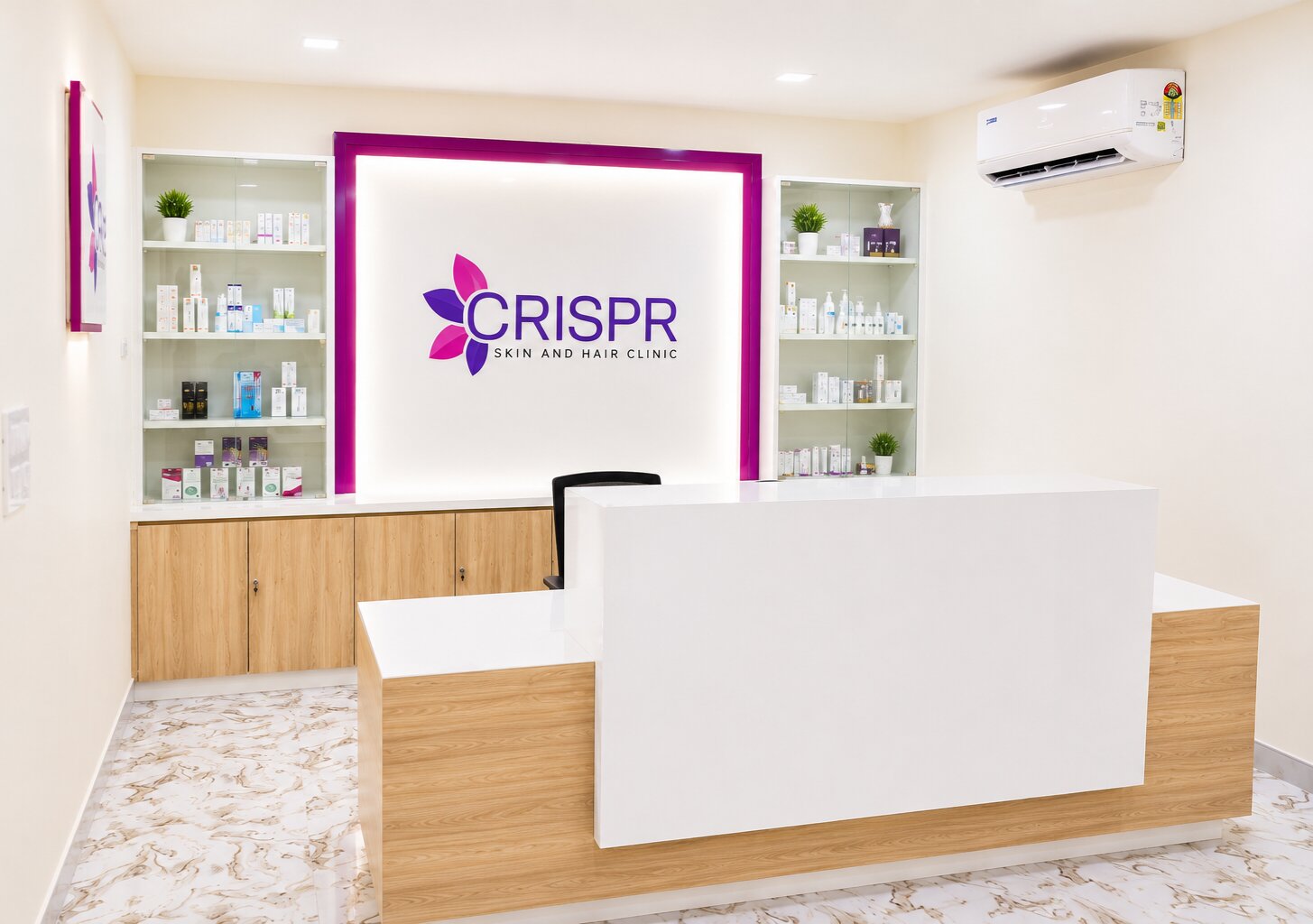
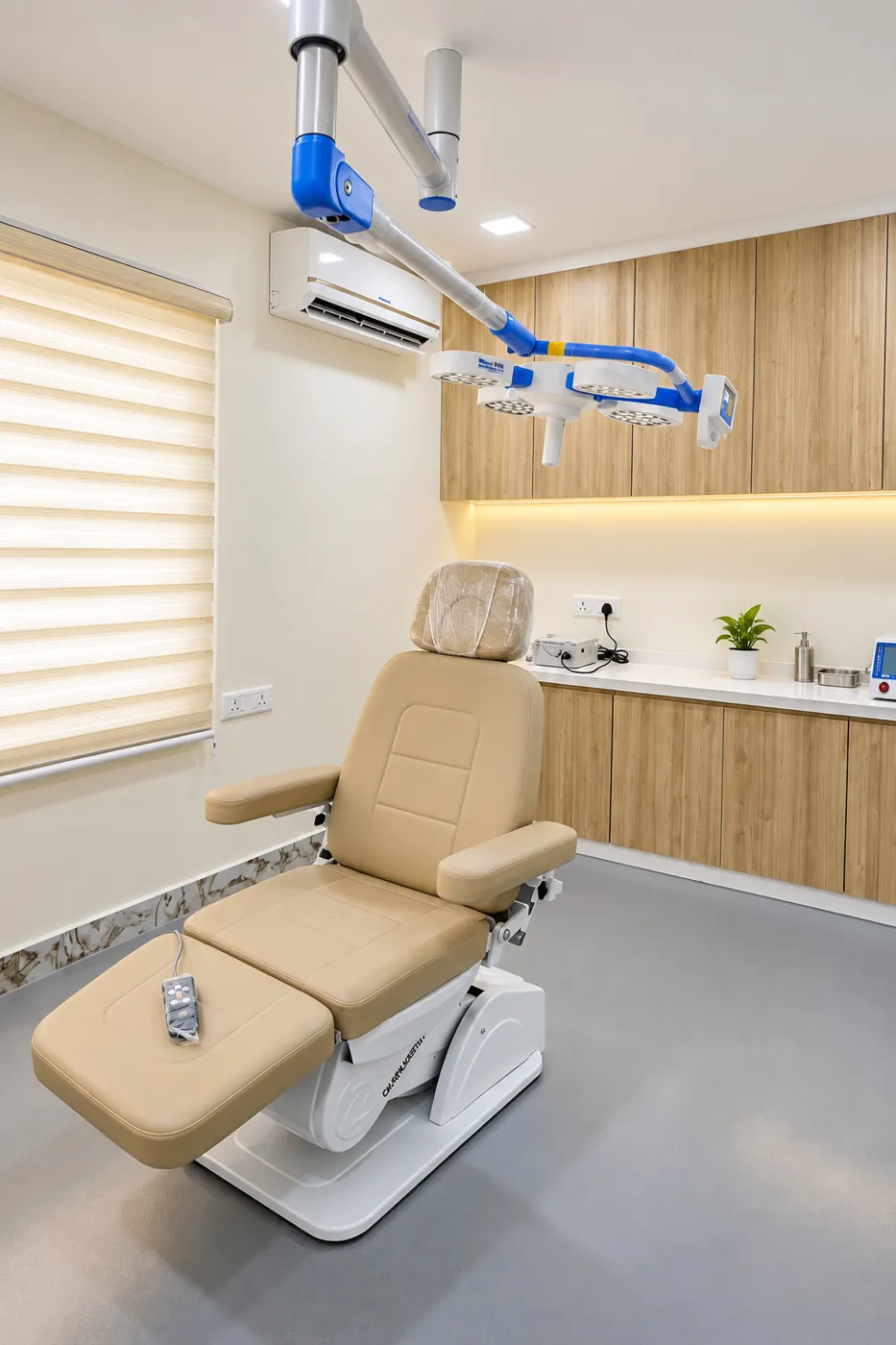
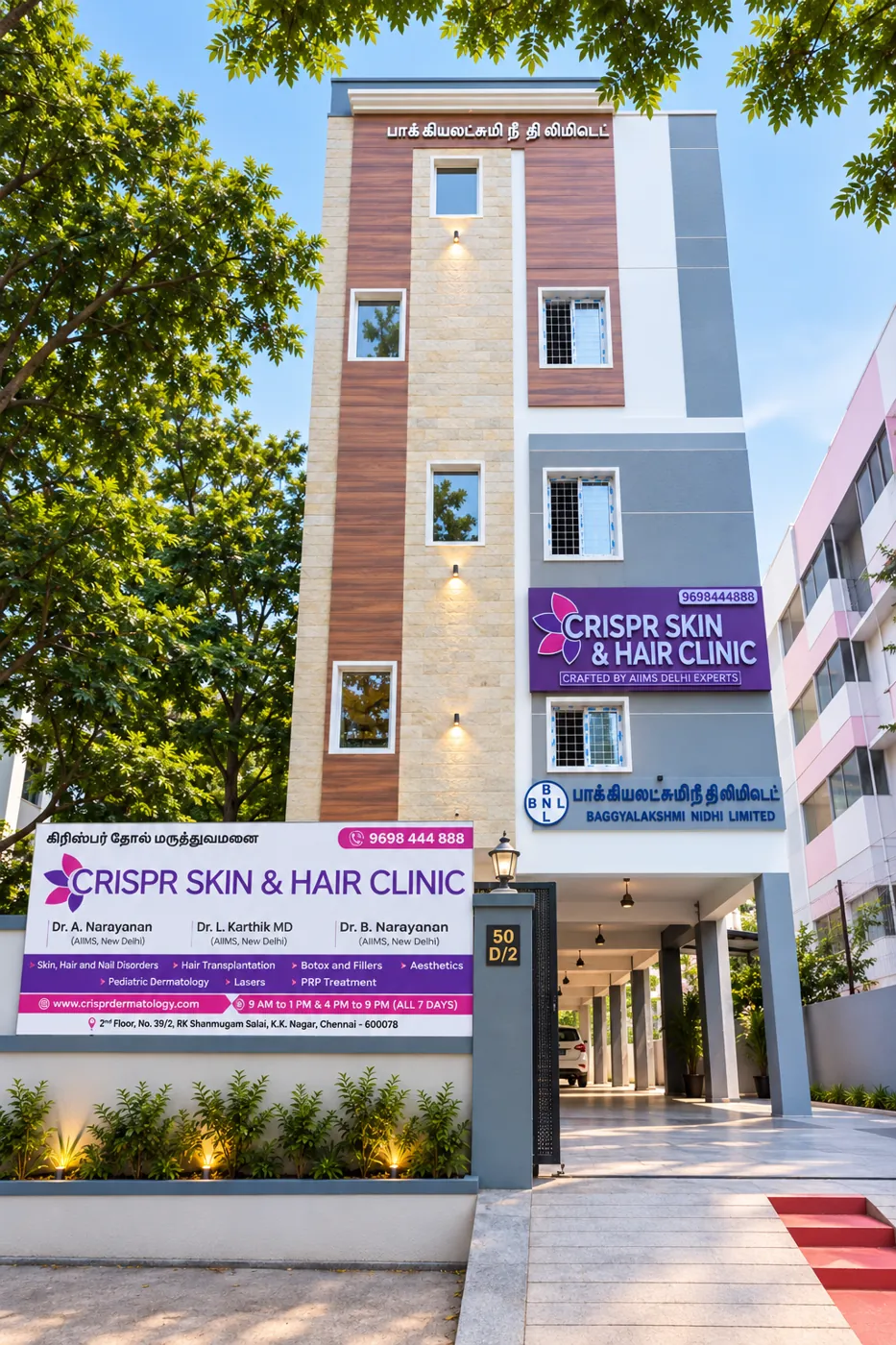
A look inside CRISPR Skin and Hair Clinic, KK Nagar.



Questions patients ask
Frequently Asked Questions
Does xanthelasma mean I have high cholesterol?
Is xanthelasma dangerous or cancerous?
Will xanthelasma go away on its own?
What are the treatment options for xanthelasma?
TCA touch, RFA, or excision: which is best for xanthelasma?
Can xanthelasma removal leave a scar?
Can xanthelasma come back after treatment?
Book Your Appointment
Select an available time slot below to secure your consultation.
1Choose a slot
Next 7 days
Available slots
You're booked
What to bring
- Previous prescriptions, reports and photos of your condition