Hormonal Skin and Hair Conditions
Jawline acne, excess hair and dark velvety patches often share one cause. Finding it means treating the skin for good, not just covering it.
- AIIMS-trained dermatologists
- Consultation first
- KK Nagar, Chennai
Evidence-based care
No unnecessary procedures
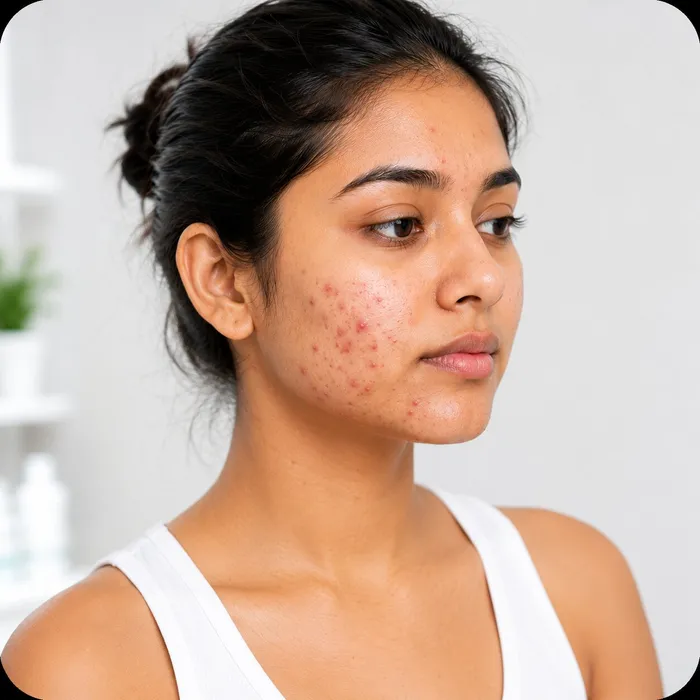
Acne, extra hair or darkening of the neck that keeps coming back?
When these appear together, or with irregular periods or weight gain, a hormonal or metabolic cause is common. A single consultation connects the dots.
Already diagnosed with PCOS or insulin resistance?
We treat the skin and hair effects of your condition and work with your gynaecologist or physician so the plan is consistent.
Acne along the jawline, thick dark hair on the chin or abdomen, and a dark, velvety neck are three very different complaints. They are often treated separately, by different people, with limited success. Yet they frequently share a root cause: hormones, especially androgens, and insulin resistance, most often in the setting of polycystic ovary syndrome (PCOS).
That is why we treat them as one cluster. A patient who comes in about hormonal acne is also asked about periods and hair. Someone with hirsutism or acanthosis nigricans is asked about blood sugar, weight and family history. Treating the skin alone, without looking for the cause, is the commonest reason for relapse.
Start With the Pattern
Our PCOS skin and hair checklist shows how the signs fit together, and our page on PCOS and the skin explains what we look for.
What We Do
We examine, order only the tests that are needed, explain the likely cause, and agree a plan. Skin and hair treatment starts at the same time as the work-up, so you do not wait. Where a wider hormonal or metabolic assessment is needed, we coordinate with your gynaecologist or physician.
Related Services
Acne treatment, laser hair reduction, female hair loss and pigmentation are closely related.
A Measured Approach
Hormonal treatments need follow-up, and results take months, because hair and skin renew slowly. We give you realistic timelines and review progress regularly.
How We Evaluate
- 1
History of periods, weight change, family history of diabetes or PCOS, and medicines
- 2
Examination of face, neck, skin folds and body hair, with a hair-growth score where relevant
- 3
Selected blood tests where indicated, such as blood sugar, HbA1c, lipids, thyroid and hormone profile, and advice on whether a pelvic ultrasound is needed
Treatment Options
Hormonal Acne Treatment
Targeted treatment for jawline and cyclical acne, combining topical therapy with hormone-directed medicines where suitable.
Hirsutism Care
Medical treatment of the cause together with laser hair reduction for visible hair, since each does a different job.
Acanthosis Nigricans Care
Identifying and treating insulin resistance, with topical treatment and, where suitable, procedures for the darkened, thickened skin.
Coordinated Care
Working with your gynaecologist, endocrinologist or physician where a wider assessment or treatment is needed.
Conditions We Manage
Related Articles
Article
PCOS and Your Skin: A Checklist of Signs
Article
Hormonal Acne Medicines Explained: Pills, Spironolactone and Isotretinoin
Article
Hormonal Acne and PCOS: When Should You Be Tested?
Article
Hormonal Acne Along the Jawline: Causes and Treatment
Article
Laser Hair Reduction and Hormonal Treatment: Why You Need Both
Article
Hirsutism: Hormone Tests and Medical Treatment
Visit Our Clinic
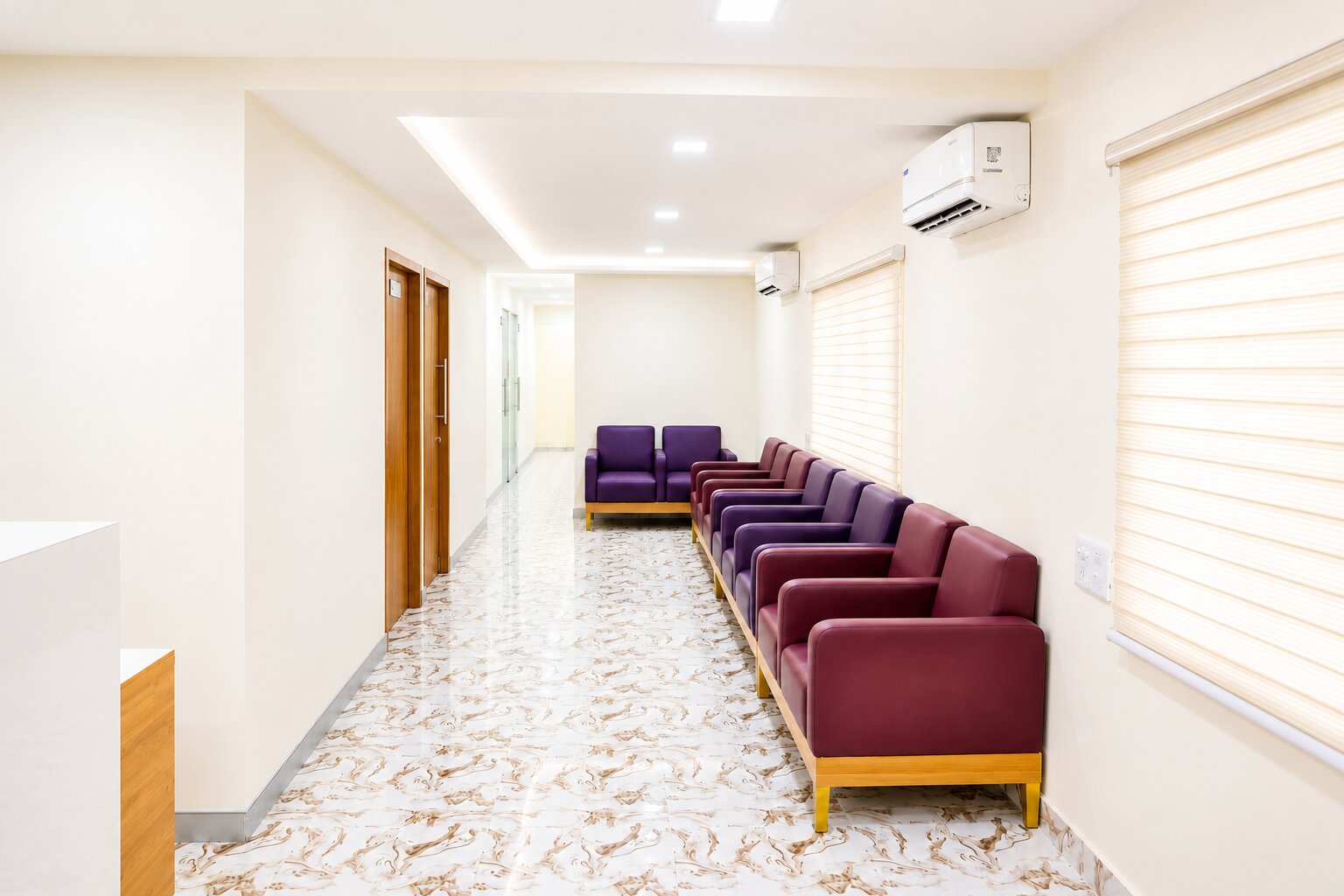
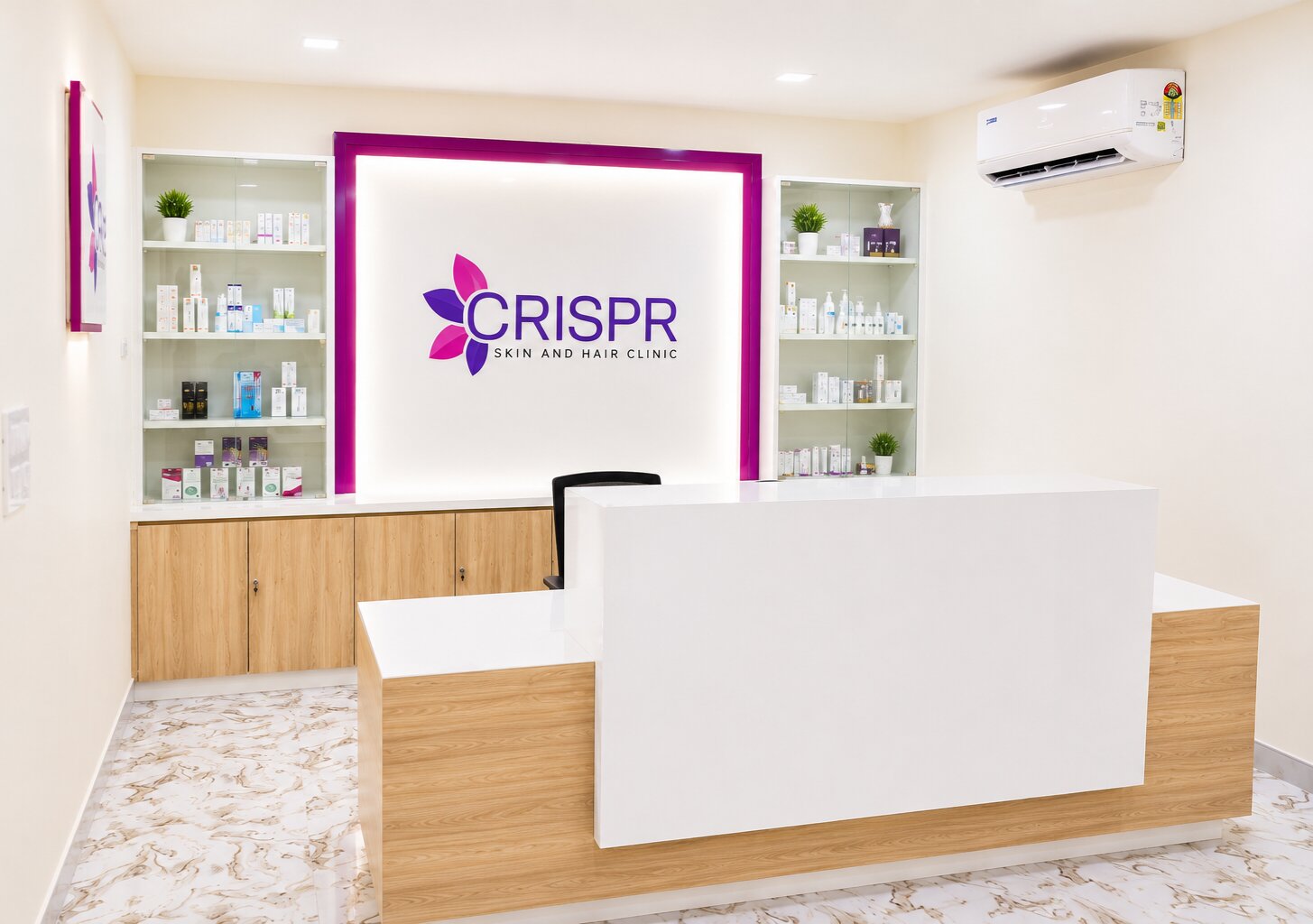
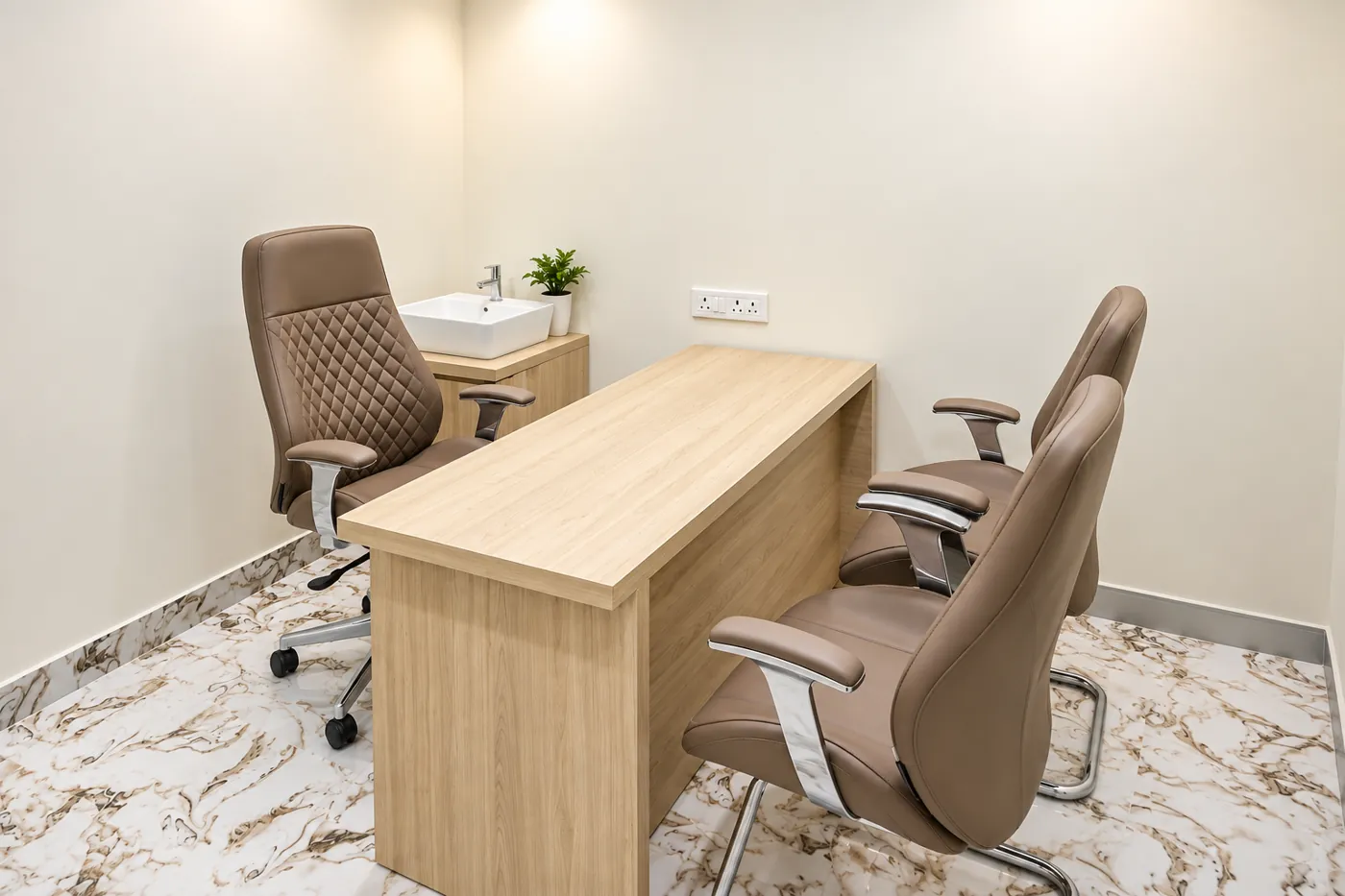
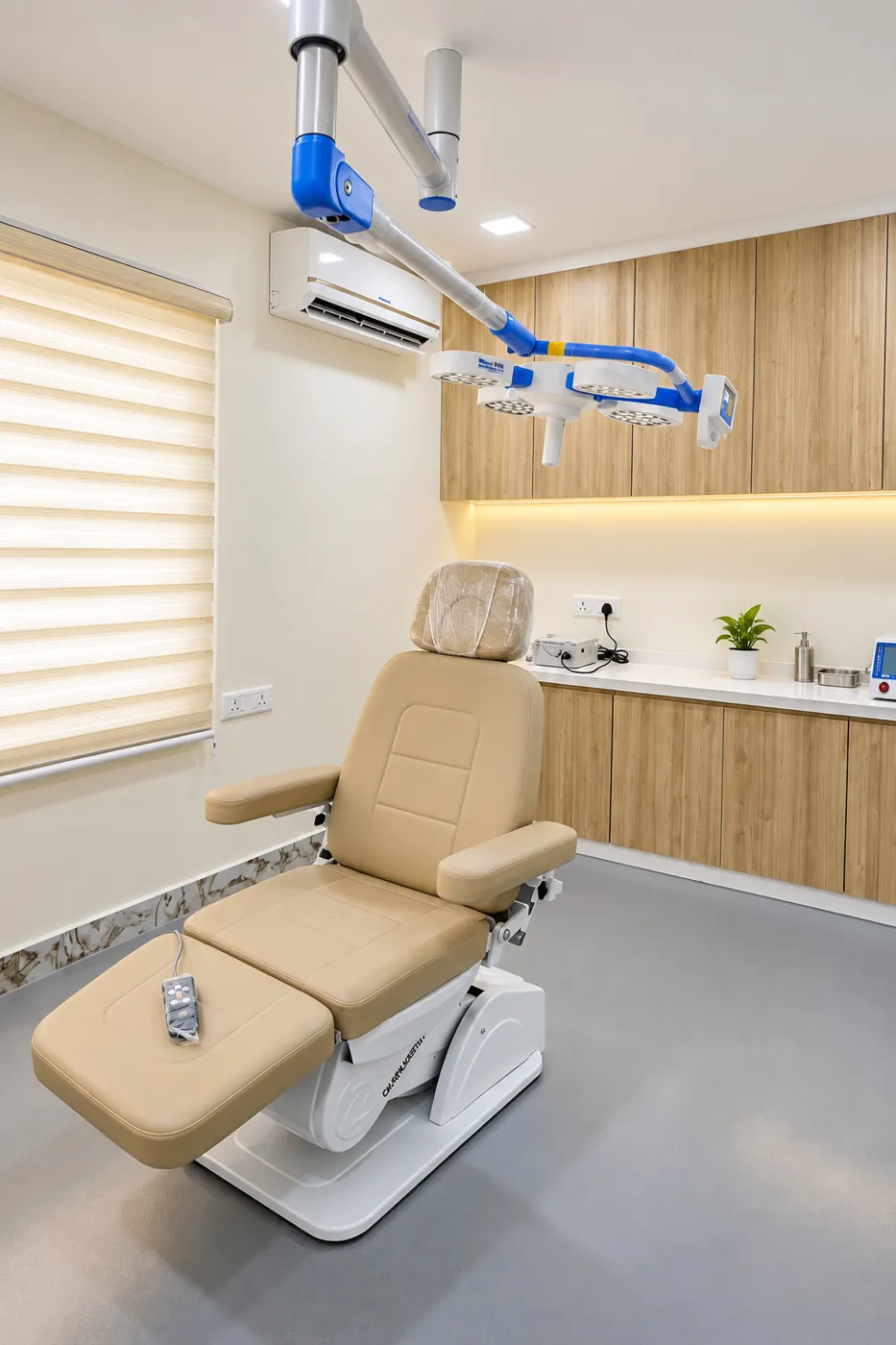
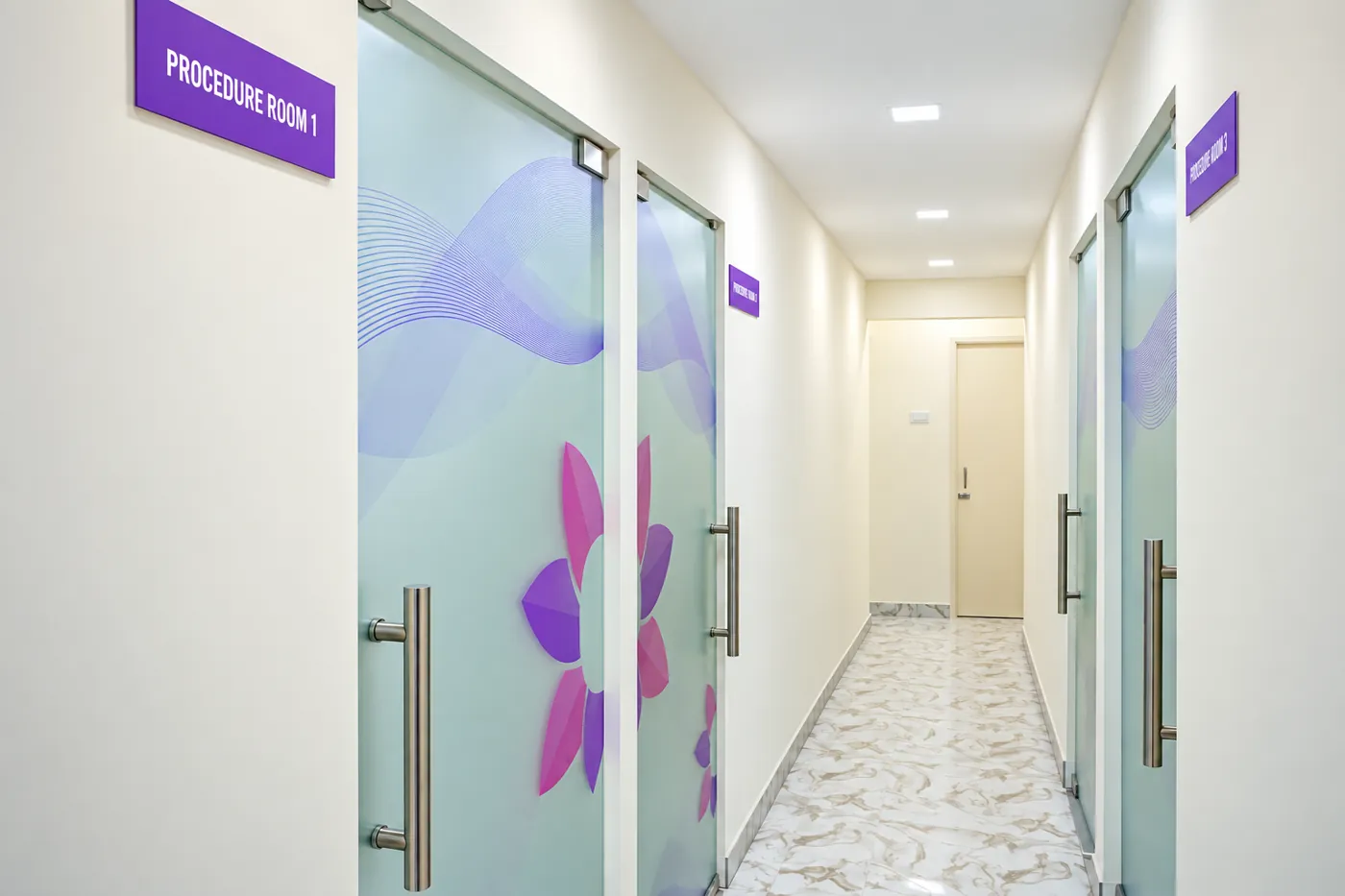
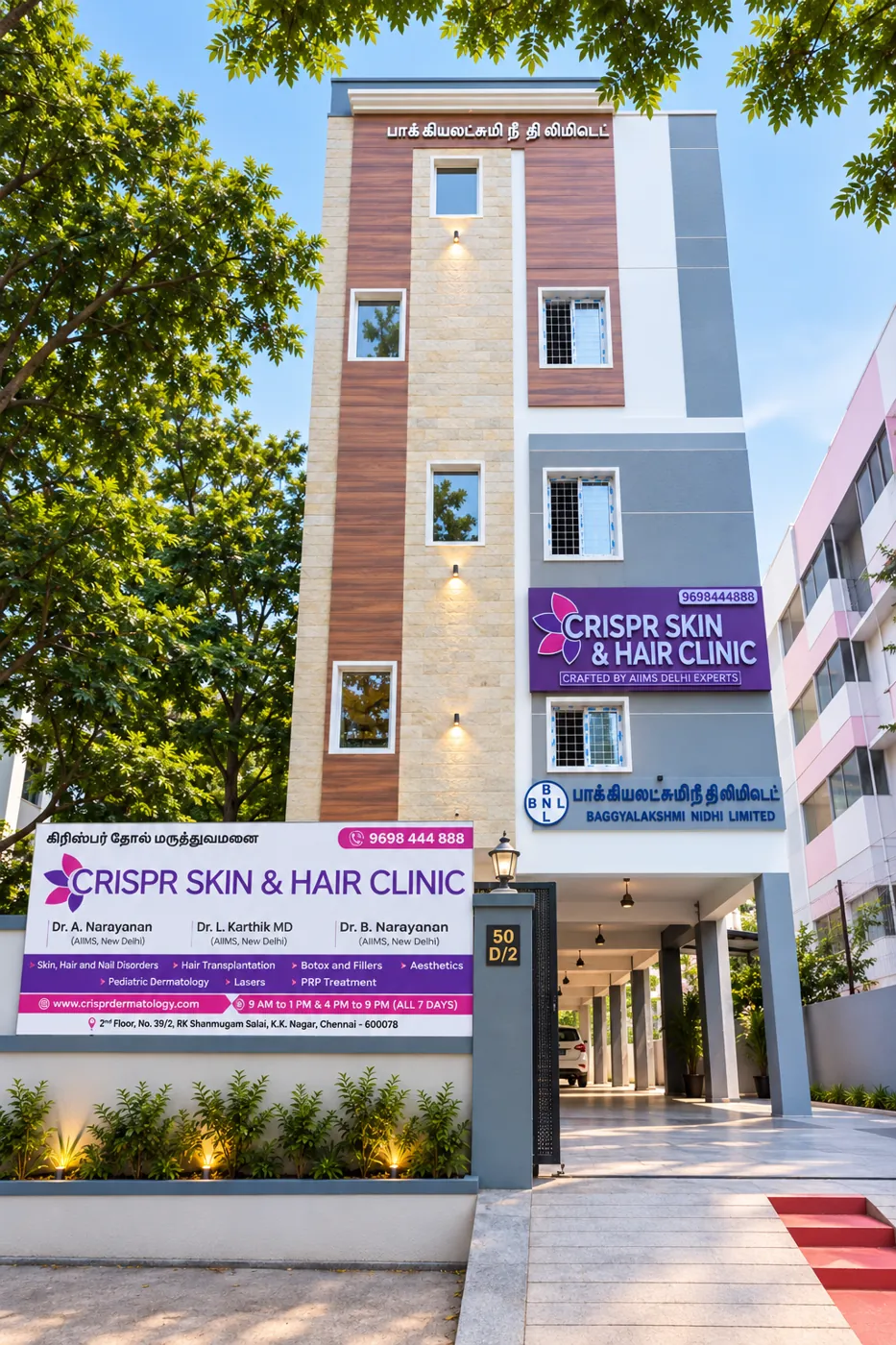
A look inside CRISPR Skin and Hair Clinic, KK Nagar.
Questions patients ask
Frequently Asked Questions
How is hormonal acne different from ordinary acne?
Do I need blood tests for hormonal acne?
Are hormonal medicines for acne safe?
How do I know whether my hair growth is normal?
Is excess hair always due to PCOS?
How long does hirsutism treatment take to work?
Is a dark neck caused by poor hygiene?
Can acanthosis nigricans go away?
What skin signs suggest PCOS?
Can PCOS cause hair loss?
Book Your Appointment
Select an available time slot below to secure your consultation.
1Choose a slot
Next 7 days
Available slots
You're booked
What to bring
- Previous prescriptions, reports and photos of your condition