
Medical Treatment for Hair Loss
Finasteride and minoxidil are the best-evidenced medicines for pattern hair loss. Used properly and consistently, they slow loss in most people and thicken hair in many.
- AIIMS-trained dermatologists
- Consultation first
- KK Nagar, Chennai

Evidence-based care
No unnecessary procedures
Early thinning or a receding hairline?
Medicines work best when started early, while follicles are still shrinking rather than gone. A scalp examination tells us what stage you are at and what is realistic.
Already on a medicine and not sure it is working?
Results take months and need consistency. We review photographs, adherence and side effects, and adjust the plan rather than leaving you to guess.
Pattern hair loss is a gradual, progressive condition. Left alone, it keeps advancing. Two medicines have the strongest evidence for slowing it, and sometimes partly reversing it: finasteride (an oral tablet, for men) and minoxidil (a lotion or foam, and increasingly a low-dose tablet).
How Well Do They Work?
In clinical trials, most men on finasteride for two years stopped losing hair, and roughly half or more regrew some hair. Minoxidil thickens hair in a good proportion of both men and women, and the combination tends to do better than either one alone. Hair that has already gone completely, in a smooth, shiny area, rarely comes back, which is why starting early matters. Read our full guide on how effective medical treatment for hair loss really is.
Oral Finasteride
Finasteride blocks the enzyme that turns testosterone into DHT, the hormone that shrinks scalp follicles. It is taken once a day and takes three to six months to show a benefit, with the best result by twelve months. See oral finasteride: benefits and side effects.
Oral and Topical Minoxidil
Minoxidil does not act on hormones. It prolongs the growth phase of the hair cycle and increases the thickness of each hair. The low-dose oral tablet is convenient and often well tolerated, but it is prescribed off-label, and needs a blood pressure and pulse check and monitoring for side effects such as ankle swelling and extra body hair. See what to know about oral minoxidil.
Stopping Means Losing the Gain
These medicines control the condition; they do not cure it. If you stop, the benefit fades over six to twelve months. Our guide on what happens when you stop hair loss medicines explains how to plan around this.
Medicines and Hair Transplant
A transplant moves hair from the back of the scalp, but does not stop the surrounding natural hair from thinning. Medical treatment protects what you have and is advised for most people before and after surgery. See do you still need medicines after a hair transplant and our FUE hair transplant service.
Women
Finasteride is not used in women who could become pregnant. Minoxidil, and in selected women anti-androgen medicines, are the main options. See medical treatment for female pattern hair loss and our female hair loss service.
A Measured Approach
We prescribe only after an examination, explain benefits and side effects honestly, and review you regularly. Some patients do not need medicines at all, and some are better served by a different diagnosis. We will tell you which applies to you.
How We Evaluate
- 1
Scalp examination and pattern staging, with standardised photographs for tracking
- 2
Checks for other causes of shedding, such as iron, thyroid or vitamin D deficiency, where relevant
- 3
Review of general health, blood pressure, medicines and family planning before prescribing
Treatment Options
Oral Finasteride
Lowers the hormone (DHT) that shrinks follicles in male pattern hair loss. Prescribed for men after discussion of benefits and side effects.
Oral and Topical Minoxidil
Prolongs the growth phase and thickens hair. Low-dose oral minoxidil is an established option, used off-label with monitoring.
Combination Plans
Using both medicines together, with or without other measures, often gives better results than either alone.
Long-Term Review
Regular reviews with photographs to confirm response, manage side effects, and decide when a transplant should be considered.
Conditions We Manage
Related Articles
Article
Winter Hair Fall and Dry Scalp: What Is Normal?
Article
Nutrition and Hair Loss: Iron, Vitamin D, Protein and Crash Diets
Article
Who Should Wait Before Getting a Hair Transplant?
Article
Medical Treatment for Female Pattern Hair Loss
Article
What Happens If You Stop Finasteride or Minoxidil?
Article
Finasteride and Minoxidil Together: A Combination Plan
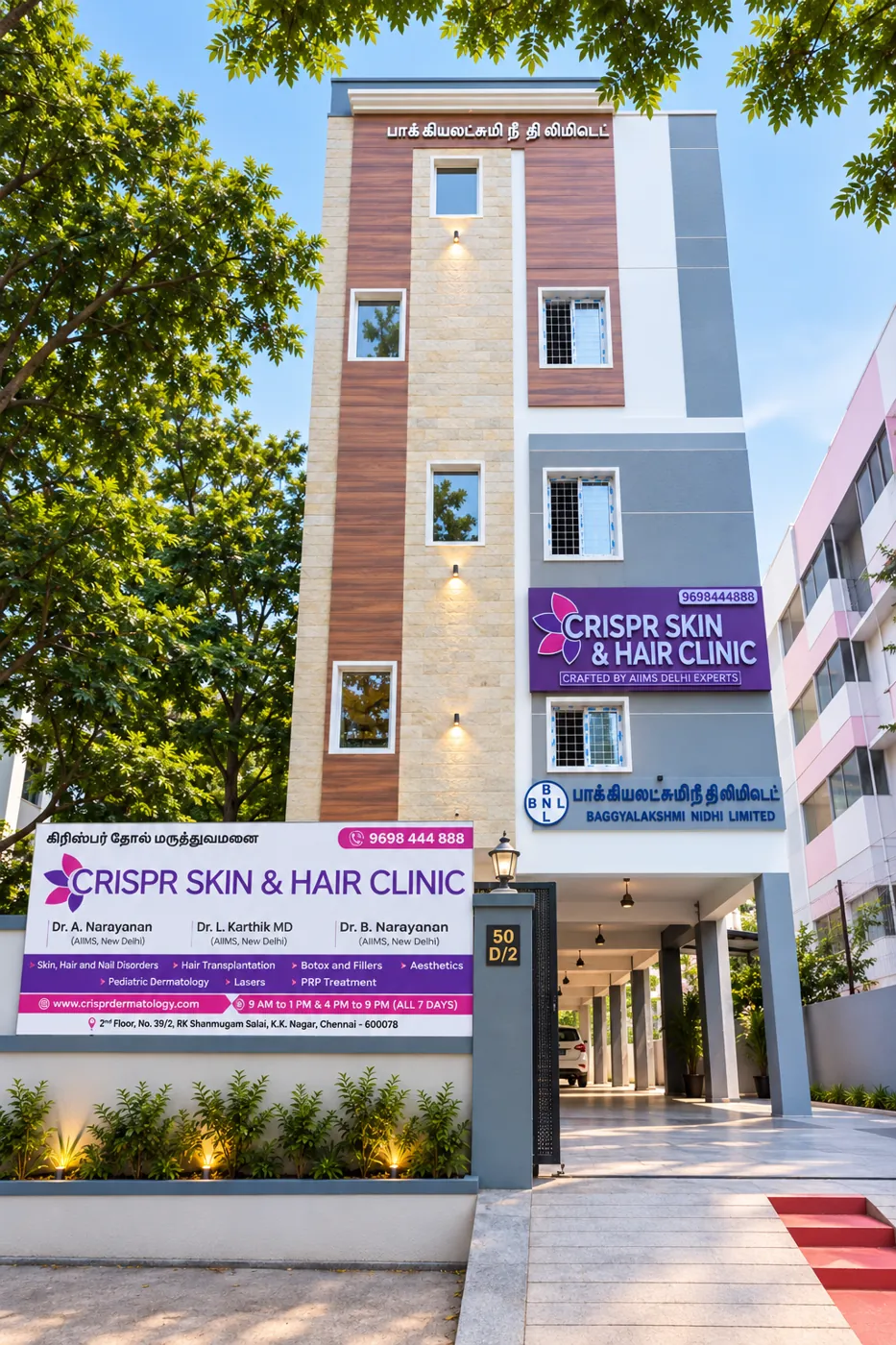
Visit Our Clinic
A look inside CRISPR Skin and Hair Clinic, KK Nagar.





Questions patients ask
Frequently Asked Questions
How well does finasteride work for male pattern hair loss?
What are the side effects of finasteride?
Is oral minoxidil safe for hair loss?
Why does hair shed more when I start minoxidil?
How long do hair loss medicines take to work?
What happens if I stop finasteride or minoxidil?
Can women take finasteride or minoxidil?
Is hair loss reversible?
Book Your Appointment
Select an available time slot below to secure your consultation.
1Choose a slot
Next 7 days
Available slots
You're booked
What to bring
- Previous prescriptions, reports and photos of your condition