
Norwood Scale: Stages of Male Pattern Hair Loss
Knowing your stage helps set realistic expectations for medical treatment and for any future hair transplant.
Book a Hair Transplant ConsultationWondering how advanced your hair loss is?
The Norwood scale grades loss from a slightly receding hairline to extensive baldness. An examination places you on it accurately.
Considering a transplant?
Your stage, together with donor supply, shapes how much coverage is realistic and whether medical therapy should come first.
What Is It?
The Norwood scale is the standard way of describing the stages of male pattern hair loss. It gives patients and doctors a shared language for how far loss has progressed, and it is one of the first tools we use when planning treatment, whether that is medical therapy, a hair transplant, or a combination. Understanding where you sit on the scale helps you set realistic expectations.
What Male Pattern Hair Loss Is
Male pattern hair loss, also called androgenetic alopecia, is the most common cause of hair loss in men. Hair follicles at the front, temples, and crown are genetically sensitive to a hormone derivative called DHT, and over time they shrink, producing thinner, shorter hairs until they stop producing visible hair. The follicles at the back and sides of the scalp are largely resistant, which is why this area is used as the donor site in hair transplantation. It tends to progress gradually over years, though the rate varies widely between individuals.
The Stages
The scale runs from stage 1 to stage 7, with several intermediate variants.
Stage 1. No significant hair loss or recession of the hairline.
Stage 2. Slight recession at the temples, forming a mild triangular pattern. This is common and often considered a mature hairline rather than true loss.
Stage 3. The first stage considered clinically significant. The temples are deeply recessed, forming an M, U, or V shape. In stage 3 vertex, thinning also appears at the crown.
Stage 4. Further frontal recession, and a larger area of thinning at the crown. A strip of hair remains between the two areas.
Stage 5. The two areas of loss enlarge, and the band of hair between them becomes narrower and thinner.
Stage 6. The bridge of hair between the front and crown disappears or becomes very sparse, so the front and crown areas merge into one large area.
Stage 7. The most advanced stage. Only a band of hair remains around the sides and back of the scalp, and it may be thin.
Why Staging Matters
It guides treatment. At early stages, medical treatment may slow progression and preserve existing hair, and may be enough on its own. At moderate stages, a combination of medical therapy and surgery may be appropriate. At advanced stages, donor supply limits what surgery can achieve.
It sets expectations. A patient at stage 3 has different options and a different realistic result from one at stage 6. Knowing your stage helps you understand what coverage is achievable.
It helps predict the future. Hair loss usually progresses, so planning should account for where your pattern is heading. A young patient at stage 2 or 3 may progress further over the years, and a transplant planned today must still look natural later.
It aids monitoring. Tracking your stage and taking photographs over time shows whether treatment is working.
Staging and Hair Transplant Planning
Stage and donor supply are considered together. Patients at moderate stages often have enough donor hair to achieve good coverage of the frontal hairline and mid-scalp. In advanced stages, supply may not cover everything at natural density, so a plan prioritises the areas that frame the face. We estimate graft numbers based on your area of loss and your donor density, and discuss what is realistic.
Importantly, transplanting too early, in a patient whose loss is still evolving, can lead to an unnatural result later. This is why we sometimes recommend medical treatment and monitoring first, particularly in younger patients.
Limitations of the Scale
The Norwood scale describes patterns in men and simplifies a complex process. Not everyone follows the classic stages neatly, and other patterns exist, including diffuse thinning. Female pattern hair loss follows a different pattern and is described by other scales. Other conditions such as alopecia areata, scarring alopecias, and temporary shedding need their own diagnosis, and the Norwood scale applies only to pattern hair loss, so confirming the diagnosis comes first.
What We Do at Your Visit
We examine your scalp, assess the pattern and stage of your hair loss, and look at donor density and hair characteristics. We discuss your family history and how fast loss has progressed. We may check for other contributing factors such as thyroid problems or nutritional deficiencies. We then explain which stage you are at, how your pattern might progress, and which options make sense.
Treatment Options by Stage
Early stages are often well suited to medical therapy, which helps slow loss and may thicken existing hair. Moderate stages may benefit from a combined approach. At more advanced stages, a transplant can restore frontal framing, within the limits of donor supply, and medical therapy can help protect the rest.
The Bottom Line
Your stage is a starting point for a conversation, not a verdict. If you are noticing hair loss, an evaluation gives you an accurate picture of where you are, where you are likely to go, and what options are open to you.
Medicines Before Surgery
Most men with early to moderate loss do well to start with medicines, because they slow progression and protect what is left. See medical treatment for hair loss and how effective it really is.
Risk Factors
- Family history of male pattern baldness
- Increasing age
- Hormonal sensitivity of hair follicles to DHT
Symptoms
- Receding hairline at the temples
- Thinning at the crown or vertex
- Progressive widening of the parting or recession over time
Treatment
Medical Therapy
Treatments that slow loss and support existing hair, often useful at early stages.
Hair Transplant (FUE)
Considered when loss has stabilised enough to plan around and donor supply is adequate.
Staging and Planning
A clear baseline and a plan for how loss may progress over the coming years.
Learn more about Hair Transplant in Chennai (FUE) | KK Nagar →
Related Articles
Related Conditions
Our Specialists



Visit Our Clinic
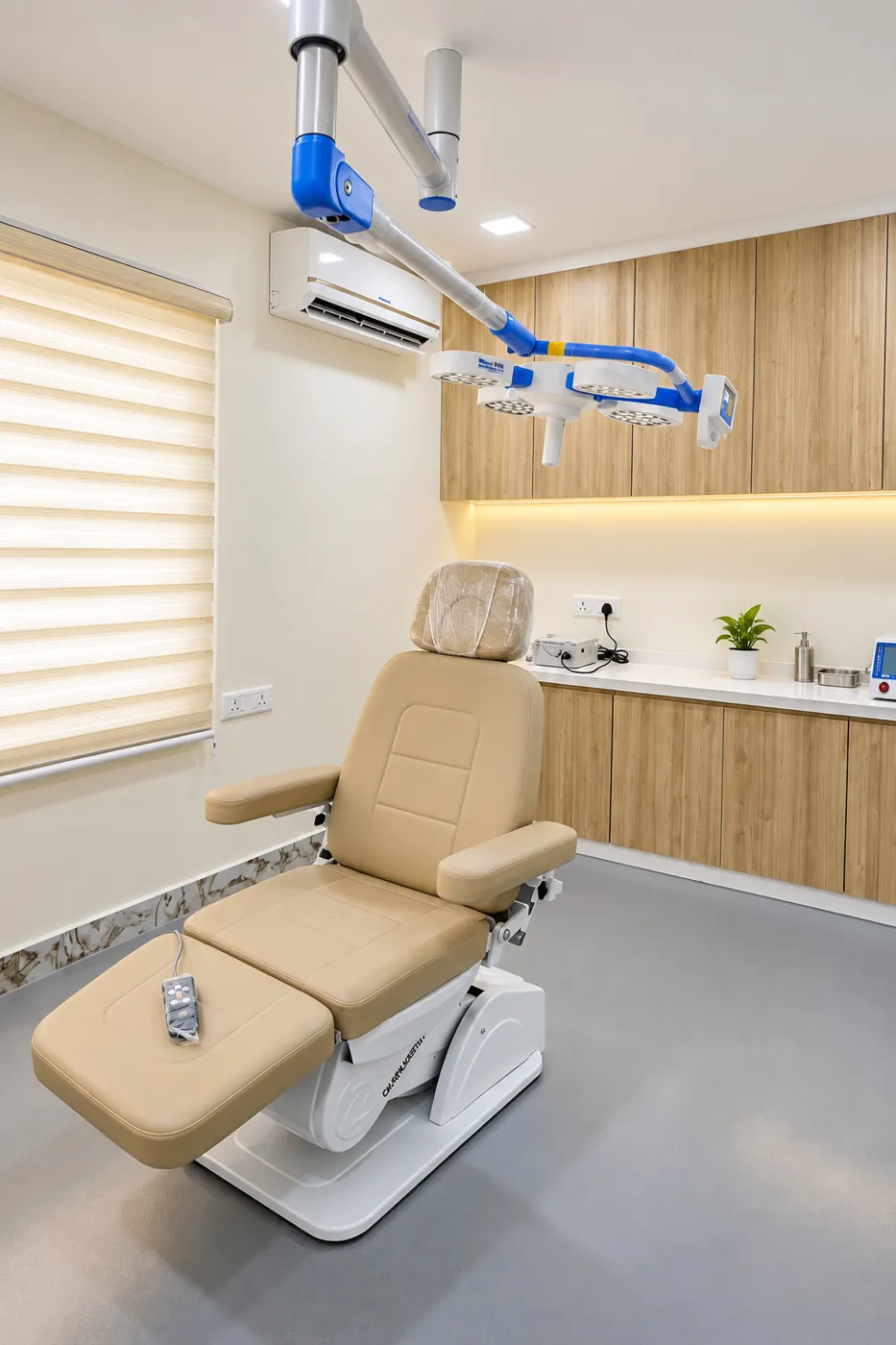
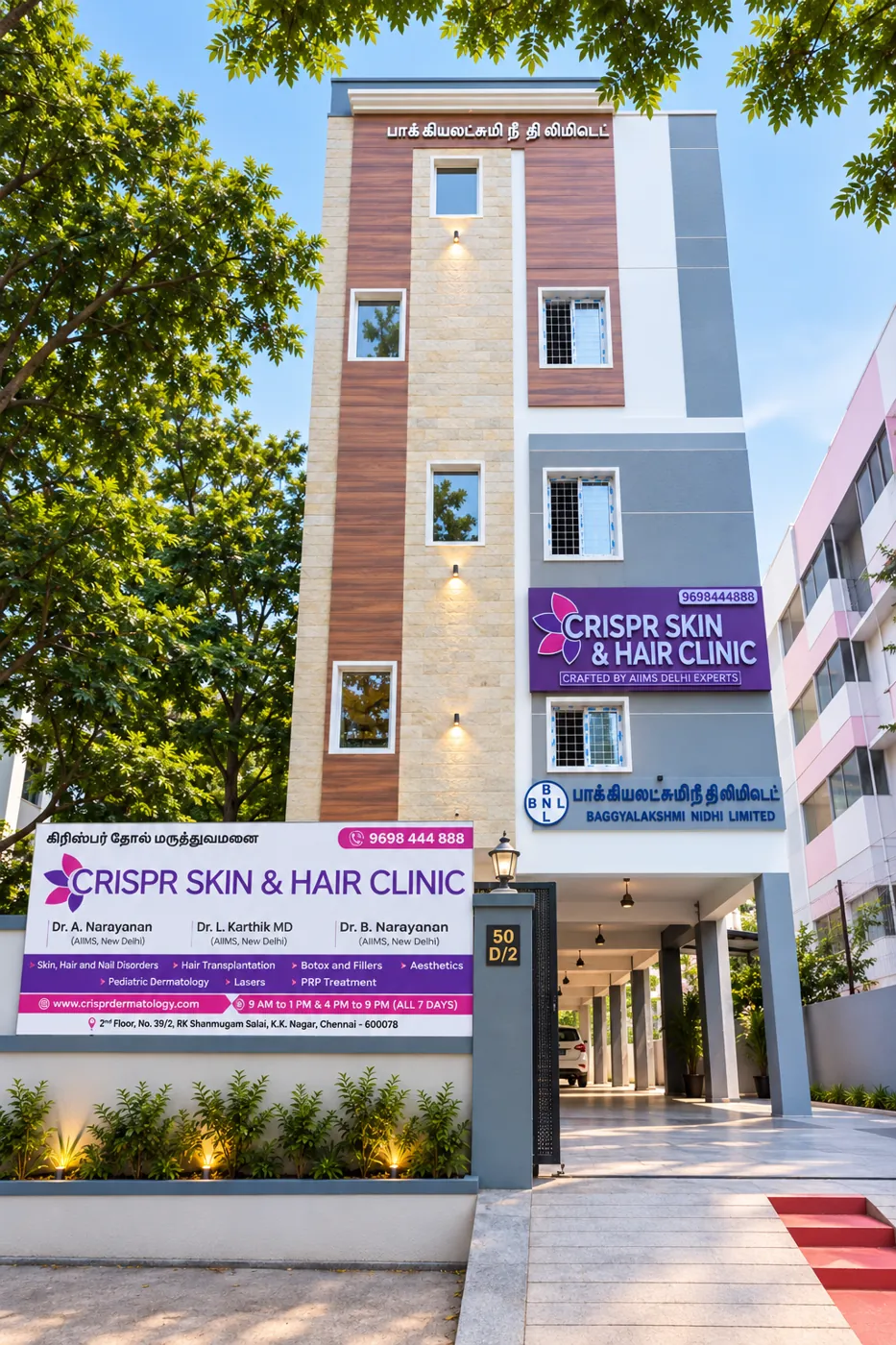
A look inside CRISPR Skin and Hair Clinic, KK Nagar.




Questions patients ask
Frequently Asked Questions
Is there a minimum age for a hair transplant?
How many grafts will I need for a hair transplant?
Is hair loss reversible?
Book a Hair Transplant Consultation
Schedule a comprehensive evaluation at CRISPR Skin and Hair Clinic. Choose your preferred time and secure your slot instantly.
Open Booking Calendar