
Scabies
Intense itching, worse at night, from a tiny mite. Easy to treat, if the whole household is treated at once.
Book a Scabies ConsultationItching badly at night, with others at home also scratching?
This is the classic pattern of scabies, which spreads by close contact. Treating only the person who itches is the commonest reason it returns.
Already treated, but still itching?
Itching can persist for weeks after the mites are gone. A review separates normal healing itch from reinfestation or another condition.
What Is It?
Scabies is caused by a tiny mite, Sarcoptes scabiei, which burrows into the top layer of skin. It spreads through prolonged skin contact and shared bedding, and is common in families, hostels and crowded settings. It is not a sign of poor hygiene.
Diagnosis
Usually from the pattern of itch and the distribution of bumps and burrows, with a dermatoscope or a skin scraping if needed. Scabies is often mistaken for eczema or allergy, and treated with steroid creams, which hide the signs and let it spread.
Treatment
Permethrin cream is applied to the whole body below the neck (and the scalp and face in children and the elderly), left on for the time advised, then washed off and repeated after a week. Tablets (ivermectin) are an alternative, taken twice a week apart, but not suitable for pregnant women and small children. Everyone in the household and close contacts must be treated together. See scabies treatment step by step.
After Treatment
Itching and bumps can last two to four weeks, since the skin is still reacting to dead mites. Moisturisers and antihistamines help. New burrows or new itching after two weeks suggest reinfestation or treatment failure, and need review.
Preventing Reinfestation
Wash clothes, bedding and towels at the hottest suitable temperature, and dry them in the sun or on high heat, or seal them in a bag for several days. Vacuum mattresses and sofas. See scabies in families and schools.
When to See a Doctor
See a doctor for night-time itching that others share, rashes between the fingers, itching in babies or people with weak immunity, or infected sores. See common skin infections.
Risk Factors
- Close or household contact with someone who has scabies
- Crowded living, hostels and care homes
- Sharing bedding and clothes
- Weak immunity (crusted scabies)
Symptoms
- Intense itching, worse at night
- Tiny red bumps and thin, wavy burrow lines between the fingers, wrists, waist, armpits and genitals
- In babies and young children, blisters or bumps on the palms, soles, face and scalp
- Scratch marks, and sometimes infected sores
Treatment
Scabicide Cream or Tablets
Permethrin cream over the whole body from the neck down, or ivermectin tablets, repeated after one to two weeks.
Treating Everyone Together
All household members and close contacts are treated on the same day, even without symptoms.
Washing and Cleaning
Clothes, bedding and towels are washed hot and dried, or sealed away for several days.
Soothing the Itch
Moisturiser and antihistamines for sleep while the skin settles.
Learn more about Scabies, Impetigo and Boils Treatment in Chennai →
Related Articles
Related Conditions
Our Specialists



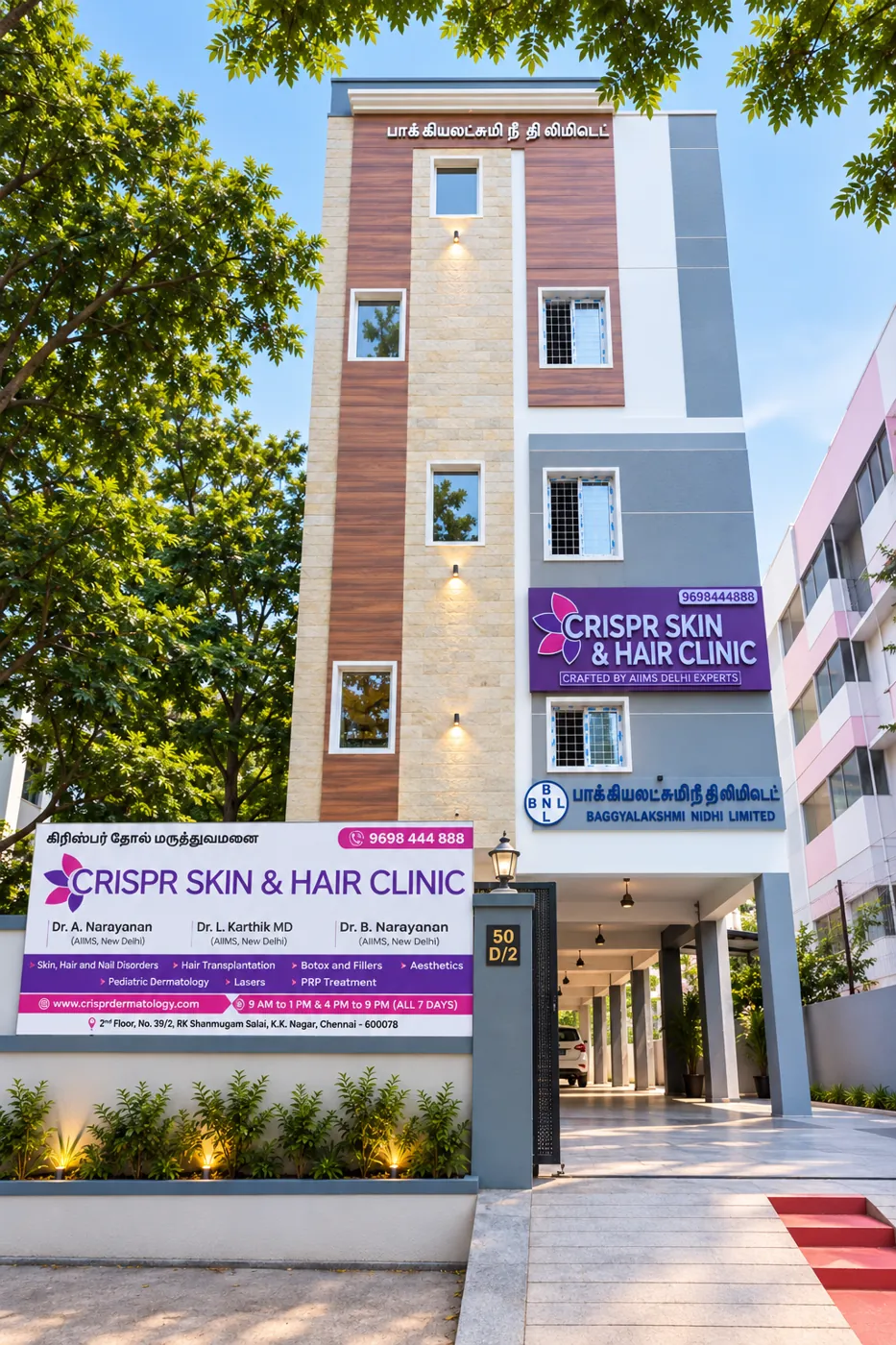
Visit Our Clinic
A look inside CRISPR Skin and Hair Clinic, KK Nagar.





Questions patients ask
Frequently Asked Questions
Why do I still itch after scabies treatment?
Should the whole family be treated for scabies?
How should clothes and bedding be washed after scabies?
Book a Scabies Consultation
Schedule a comprehensive evaluation at CRISPR Skin and Hair Clinic. Choose your preferred time and secure your slot instantly.
Open Booking Calendar