
Surgical Treatment for Stable Vitiligo
For stable patches that have not repigmented with medical treatment, grafting techniques can restore pigment in carefully selected patients.
Book a Vitiligo EvaluationStable patches that have not responded to creams or light?
Persistent, stable patches, especially on exposed areas, may be suitable for surgical repigmentation.
Segmental vitiligo or small resistant patches?
These are among the groups who tend to do best with surgery, once stability has been confirmed.
What Is It?
Surgical treatment for vitiligo works by moving pigment-producing cells from healthy skin into a depigmented patch. It can give excellent results in carefully chosen patients, but it is not for everyone, and it is appropriate only when the disease has been stable. This page explains who may benefit, how the techniques differ, and what to expect.
When Surgery Is Considered
Medical treatment, meaning creams and light, is usually tried first. Surgery is considered when patches have been stable for a sustained period, commonly around six to twelve months or more, and have not repigmented adequately despite a fair trial of medical treatment. It is often a very good option for segmental vitiligo, which tends to respond poorly to creams and light but to stabilise on its own. It is also used for small, localised patches in visible areas, where cosmetic benefit is high.
Who Is Not a Good Candidate
Active, spreading vitiligo is not suitable, because the immune process can attack the transferred cells and new patches can appear at the donor site. People who tend to form keloids or thick scars are at higher risk of poor cosmetic results. Very large areas, or sites that respond poorly to grafting, may not be suitable, and unrealistic expectations are a reason to pause and talk. A small test graft on one area is sometimes done first, to see how your skin responds.
The Main Techniques
Punch grafting. Small, round pieces of skin from a pigmented donor site, usually the thigh or buttock, are placed into tiny holes made in the patch. This suits small, localised patches. Potential downsides include a cobblestone appearance and colour mismatch.
Suction blister grafting. A suction device raises blisters on the donor skin, and the thin roof of each blister, containing pigment cells, is placed on the prepared patch. Because only the top layer is taken, donor-site scarring is minimal and the cosmetic result is generally smooth. It is a commonly used option for moderate-sized patches.
Non-cultured cell suspension transfer. A small donor skin sample is treated to separate its cells, and the resulting suspension of pigment cells and skin cells is applied to the prepared patch. A small donor area can treat a much larger patch, which makes this useful for larger areas. The technique requires careful preparation and experience.
Hair follicle transplantation. Follicles that carry pigment cells are taken from the scalp or another hair-bearing area and implanted into the patch. This can be useful for segmental vitiligo and for hair-bearing sites, since follicles act as a reservoir of pigment cells.
Thin split-thickness skin grafts. A thin layer of donor skin is placed on the patch. It can cover larger areas but carries a higher risk of colour mismatch and uneven texture, so it is used selectively.
How the Technique Is Chosen
The choice depends on the size, location, and type of patch, the amount of donor skin available, your skin type, and the surgeon’s experience. Some sites, such as lips, fingertips, and the backs of joints, are harder to treat, and results are less predictable there.
Preparation and Procedure
The recipient patch is prepared so that transferred cells can take. This may involve removing the thin surface layer of the patch by a controlled method. The graft or cell suspension is then applied and covered with dressings. Procedures are usually done under local anaesthetic.
Recovery
Dressings protect the treated and donor areas, and friction and wetting need to be avoided for a period. Healing takes several weeks, and pigment typically begins to appear over the following weeks to months. Many centres combine surgery with light treatment or controlled sun exposure afterwards, since this can help the transferred cells spread and improve colour match.
Risks and Limitations
Not every graft takes, and results are rarely perfect. Possible problems include colour mismatch, either lighter or darker than surrounding skin, an uneven or cobblestone surface, scarring, infection, and failure of the graft. Vitiligo can occasionally appear in the donor area or in new sites if the disease was not truly stable. Repigmentation may be partial, and further sessions are sometimes needed.
Realistic Expectations
Good outcomes depend on good selection as much as technique. We discuss your type of vitiligo, its stability, options for your specific patches, and the realistic chance of a good result before any decision, and we will tell you plainly if surgery is not right for you yet.
If you have stable patches that have not responded to treatment, an evaluation will show whether surgical repigmentation is worth considering.
Risk Factors
- Disease that is not yet stable
- A tendency to form thick scars or keloids
- Patches that are very large, or in sites that respond poorly to grafting
Symptoms
- Well-defined, stable depigmented patches with no recent change
- Little or no repigmentation despite adequate medical treatment
- Patches on visible or functionally important sites
Treatment
Punch Grafting
Tiny skin grafts from a pigmented donor site placed into the patch, suited to small, localised areas.
Suction Blister Grafting
The thin top layer of skin is lifted from a donor area and placed on the prepared patch, giving a smooth cosmetic result.
Cell Suspension Transfer
A suspension of pigment and skin cells prepared from a small donor sample is applied to a larger patch.
Hair Follicle Transplant
Follicles carrying pigment cells are transferred, which can be useful for segmental or hair-bearing areas.
Thin Skin Graft
A thin layer of donor skin used for selected patches, with a higher risk of contour and colour mismatch.
Related Articles
Related Conditions
Our Specialists



Visit Our Clinic
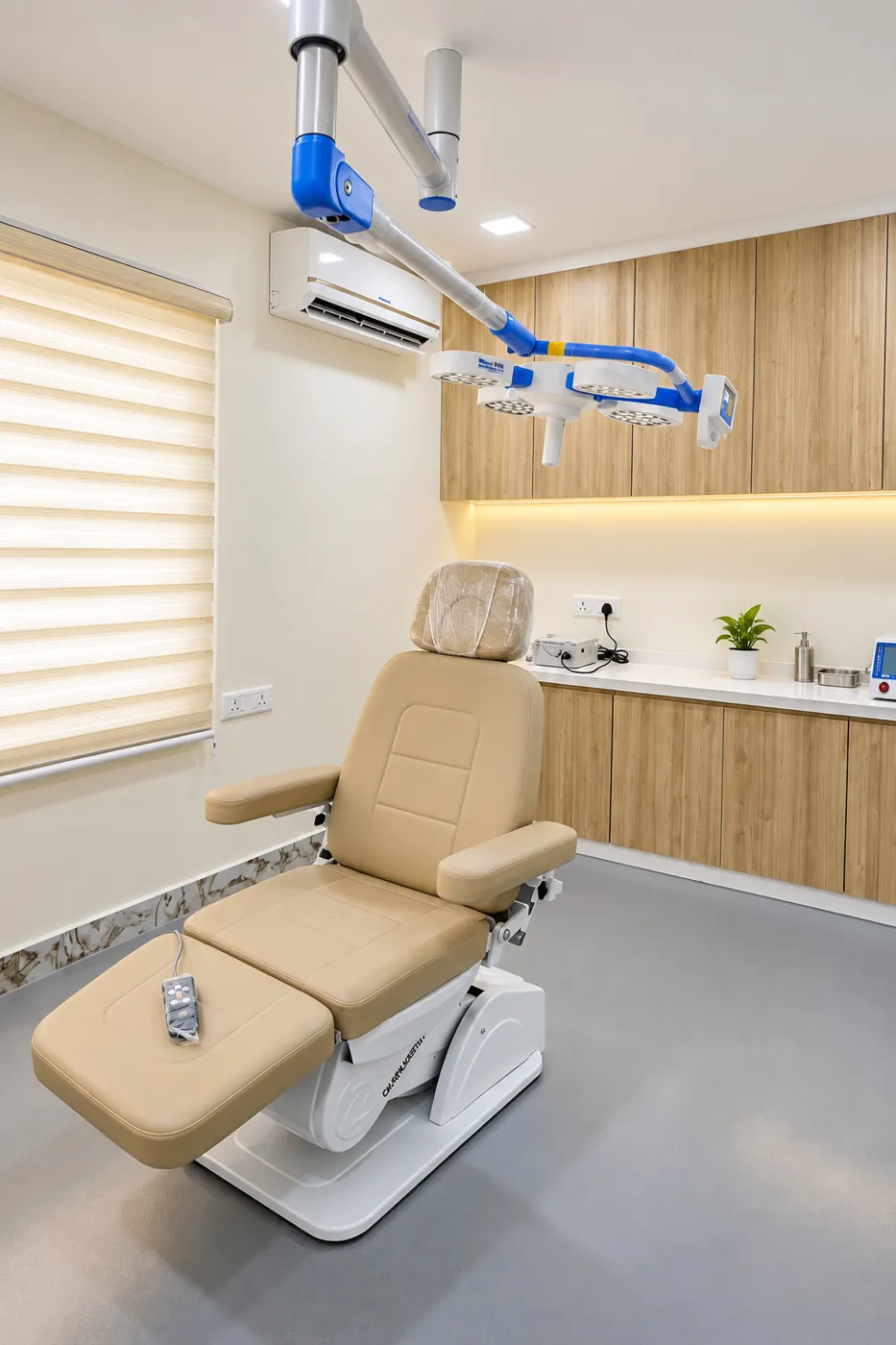
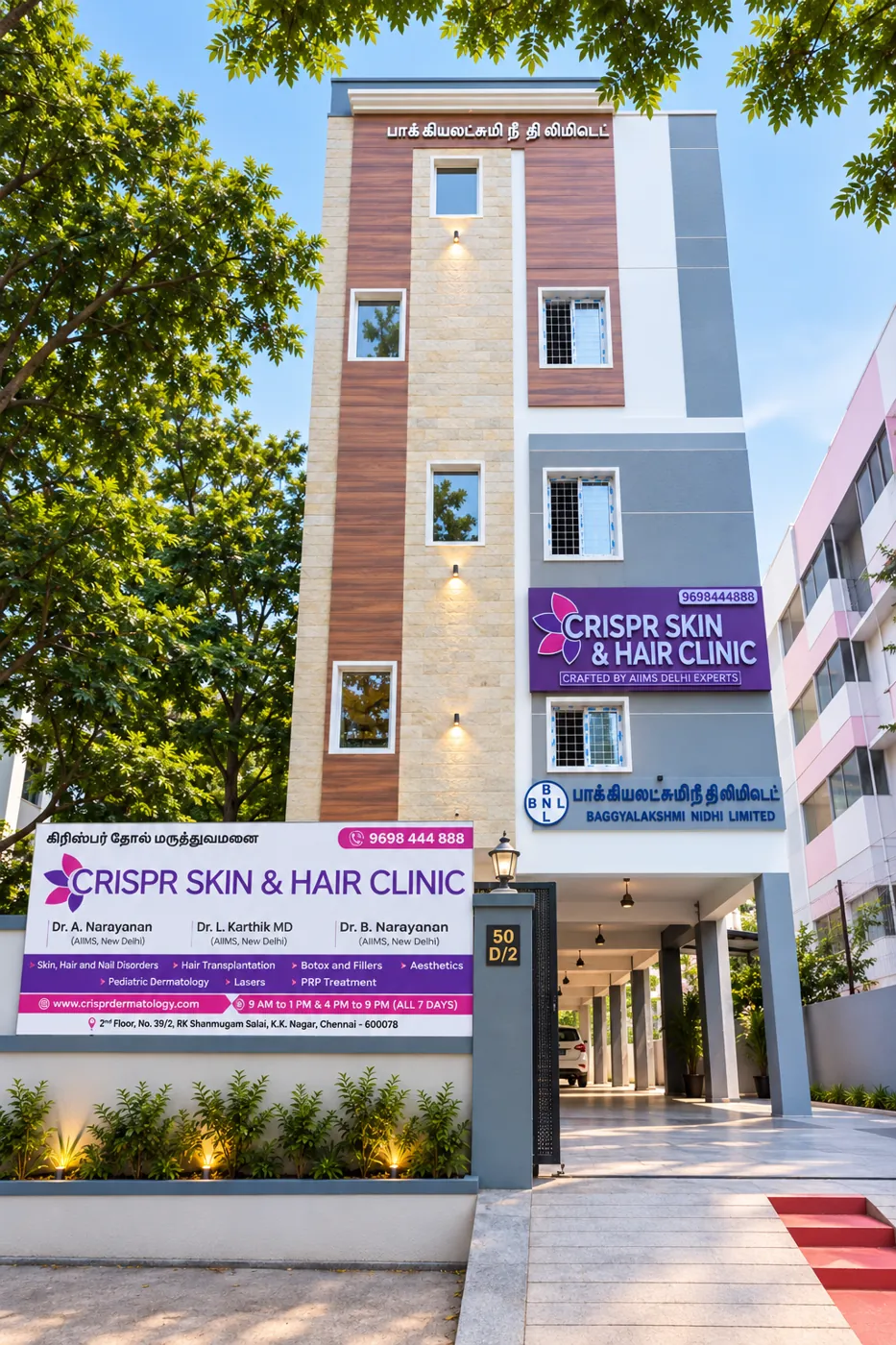
A look inside CRISPR Skin and Hair Clinic, KK Nagar.




Questions patients ask
Frequently Asked Questions
Who can have surgery for vitiligo?
What does stable vitiligo mean, and how is it judged?
What is the difference between segmental and non-segmental vitiligo?
Book a Vitiligo Evaluation
Schedule a comprehensive evaluation at CRISPR Skin and Hair Clinic. Choose your preferred time and secure your slot instantly.
Open Booking Calendar