
Segmental Vitiligo
A form of vitiligo limited to one segment of the body that usually spreads for a short period and then settles.
Book a Vitiligo EvaluationWhite patch on one side of the face, trunk, or limb?
A patch confined to one side, especially in a child or young adult, may be segmental vitiligo. Examination confirms the type.
Known segmental vitiligo that has not responded to creams?
Segmental disease often responds poorly to medical treatment, and once stable, surgical repigmentation is frequently the most effective option.
What Is It?
Segmental vitiligo is a form of vitiligo in which depigmentation is confined to one segment or area of the body, such as one side of the face, one side of the trunk, or one limb. It does not cross the midline, and it differs in several important ways from the more common non-segmental type, which affects both sides of the body and tends to progress over years. Recognising it early changes the treatment plan.
How Common Is It?
Segmental vitiligo accounts for a minority of people with vitiligo, but it is relatively more common in children. Many patients first notice it in childhood or young adulthood, and parents are often the first to seek advice.
What It Looks Like
The patch is smooth, milk-white, and sharply bordered, as in other forms of vitiligo, but its distribution is confined to one side or area. On the face, it often involves one side of the forehead, cheek, or around one eye. Hair within the patch, including eyebrows, eyelashes, and scalp hair, may turn white, and this is more common in segmental vitiligo than in the other type. White hair matters because it suggests the pigment cell reserve in the follicle has also been lost, which affects how well creams and light work.
How It Behaves
Typically, there is a period of spread over several months, sometimes up to one or two years, followed by stabilisation. After that, the patch often remains unchanged for years, and does not usually continue to appear in new places. A minority of people with segmental vitiligo later develop non-segmental patches elsewhere, so ongoing awareness is sensible, but most remain confined to the original segment.
Why It Is Different
The exact mechanism is not fully understood. A localised process is thought to be involved, rather than the more generalised immune activity seen in non-segmental disease. A practical consequence is that segmental vitiligo tends to respond less well to creams and phototherapy than the non-segmental type.
Diagnosis
Examination is usually enough, supported by a Wood’s lamp to define the extent. We look at the distribution, check for white hairs, and ask about when it began and whether it has changed. We also check whether any other patches are present elsewhere, because that changes the classification. Because other conditions can cause one-sided pale patches, confirming the diagnosis matters.
Treatment in the Active Phase
When the patch is spreading, treatment aims to limit progression. Topical therapy and targeted light treatment may be used, and in some cases short courses of other medicines are considered. Patients and families should understand that response may be limited, and that the main aim is to avoid further spread while awaiting stability.
Treatment Once Stable
Because segmental vitiligo tends to stabilise, it is often an excellent candidate for surgical repigmentation. Techniques that move pigment cells into the patch, such as suction blister grafting, non-cultured cell suspension transfer, or hair follicle transplantation, can give good and lasting results, and the tendency of the disease to stay confined helps results last. The choice of technique depends on the size and site of the patch. Surgery requires confirmed stability, commonly after a sustained period without change.
Children and Families
Because the condition often starts young, special considerations apply. Surgery is generally postponed until the child is old enough to cooperate, and decisions are individualised. Parents often feel guilt or worry, and it is worth saying clearly that nothing they did caused it. Support at school and at home helps children cope, particularly when patches are on the face.
Camouflage and Sun Protection
While waiting for stability or surgery, cosmetic camouflage and daily sunscreen are helpful. Sunscreen protects depigmented skin from burning and reduces tanning of the surrounding skin, which makes the contrast less noticeable.
If you or your child has a patch limited to one area, an early evaluation helps classify it and plan treatment.
Risk Factors
- Onset in childhood or early adulthood
- No clear trigger in most cases
- Hair in the patch turning white, which can indicate involvement of the hair follicle pigment
Symptoms
- One or a few depigmented patches limited to one side or area of the body
- Often a distinct band-like or segmental distribution
- Initial spread over months, then usually stabilising
Treatment
Medical Treatment
Topical therapy and phototherapy may be tried, though response is less predictable than in non-segmental disease.
Surgical Repigmentation
Once the patch has been stable, grafting techniques often give the best and most lasting results.
Camouflage and Support
Cosmetic options and sun protection for patches awaiting or not suitable for surgery.
Related Articles
Related Conditions
Our Specialists



Visit Our Clinic
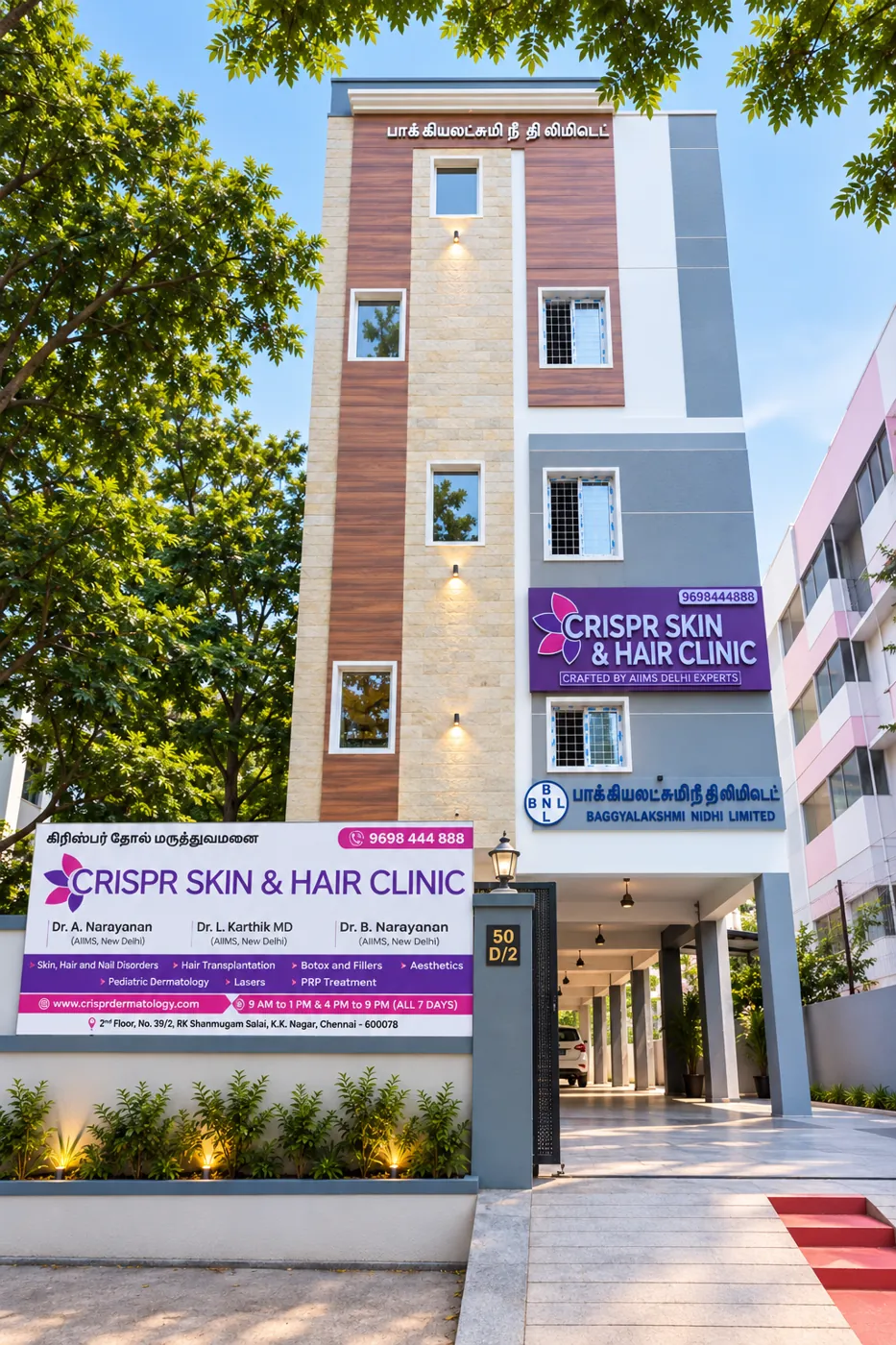
A look inside CRISPR Skin and Hair Clinic, KK Nagar.





Questions patients ask
Frequently Asked Questions
What is the difference between segmental and non-segmental vitiligo?
Who can have surgery for vitiligo?
What does stable vitiligo mean, and how is it judged?
Book a Vitiligo Evaluation
Schedule a comprehensive evaluation at CRISPR Skin and Hair Clinic. Choose your preferred time and secure your slot instantly.
Open Booking Calendar